

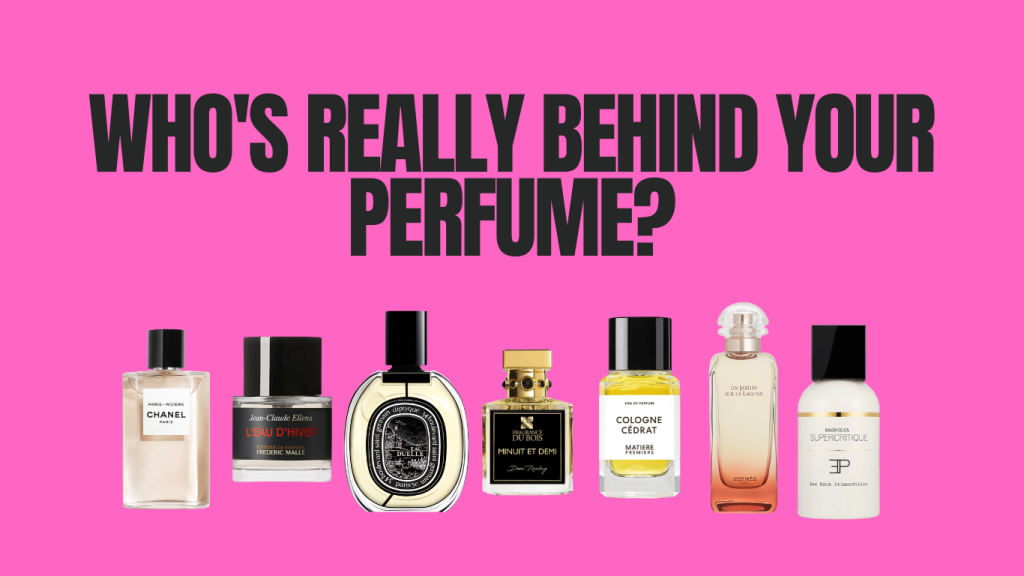
You walk into a luxury department store, eyes drawn to a shelf of expensive, beautifully bottled perfumes from various artisanal perfume brands. Each brand has an elegant, carefully crafted narrative: “Inspired by secret gardens in Morocco,” or “A tribute to forgotten French perfumery.”
The sales associate leans in. “This is a niche perfume, made with the finest ingredients,” they whisper.
But here’s the truth: it’s all marketing.
The Illusion of Artisanal Perfumery
The vast majority of perfumes, whether it’s a mainstream designer scent or a so-called niche brand, are produced by just five companies:
These manufacturers are the true architects of the fragrance world. When a brand wants to launch a new scent, they typically approach one of these firms, describe the vision, and outsource the formulation entirely.
Yet these brands market themselves as artisanal and luxurious, as if they are small-batch creations. In reality, they are as mass-produced as anything at Sephora.
So how do you separate real perfumery from manufactured storytelling? Let’s start by looking at the houses that still control their own process, and then expose the brands that sell the illusion.
The Fashion Houses That Still Control Their Own Perfume
While most designer brands have handed their perfumery to the big manufacturers, a few still maintain full creative control, blending and producing their scents in-house.
Chanel: The Last True Perfume Maison

- Why: Chanel’s perfumes are created in-house by Olivier Polge, not outsourced to Givaudan or Firmenich. Chanel even owns its own jasmine and rose fields in Grasse to control key ingredients.
- Try: Coromandel (patchouli-amber masterpiece) or No. 5 L’Eau (a fresher take on the classic).
Hermès: A Perfumer’s Brand

- Why: Christine Nagel formulates Hermès perfumes internally, ensuring each fragrance aligns with the brand’s artistry.
- Try: Terre d’Hermès Eau Givrée (cooling citrus & minerals) or Twilly d’Hermès (spicy tuberose).
Guerlain: The Last of the Old-World Perfumers

- Why: Though now owned by LVMH, Guerlain still operates its own perfume lab and distills ingredients in-house.
- Try: Mitsouko (the blueprint for chypres) or Spiritueuse Double Vanille (boozy, smoky vanilla).
Fake Niche: The Brands That Sell the Illusion of Artisanal Perfumery
These brands present themselves as small-batch, niche perfumers, but in reality, they are completely reliant on mass-market fragrance labs. They create a compelling narrative, hire a luxury branding agency, and commission perfumes from the same factories as designer brands.
These perfumes are often well made, but they aren’t handcrafted, rare, or artisanal.
Designer Brands Disguised as “Luxury” Niche
These brands use high prices and storytelling to sell a luxury illusion but rely on the same production houses as mainstream designers.
- Tom Ford → Givaudan and Firmenich
- Maison Francis Kurkdjian (MFK) → Owned by LVMH, outsourced to IFF
- Byredo → Owned by Puig, outsourced to IFF
- Kilian → Owned by Estée Lauder, outsourced to Symrise
- Diptyque → Created by IFF, though marketed as artistic and Parisian
Fake Niche Indie Brands
Some perfume brands position themselves as indie or artisanal, but are just marketing-driven ventures backed by investors.
- Kayali → Marketed as Middle Eastern luxury, but made by Firmenich
- Initio Parfums Privés → Mystery branding, but all perfumes are externally developed
- Parfums de Marly → Marketed as “royal French heritage,” but formulas come from Symrise
- Mancera & Montale → Mass-produced, outsourced to Takasago
- Memo Paris → “Inspired by travel,” but formulas come from IFF & Firmenich
- BDK Parfums → Parisian aesthetic, but made by the same labs as designer perfumes
These brands aren’t bad, some of them smell incredible. But they aren’t artisanal or independent.
The True Indie Perfumers: Houses That Control Every Step
If you want real perfume made by the hands of true artists, these are the brands to seek out.
Tauer Perfumes (Switzerland)

- Why: Andy Tauer hand-blends every fragrance in his Zurich studio.
- Try: L’Air du Désert Marocain (smoky amber and spices).
Hiram Green (Netherlands)

- Why: One of the only true 100% natural perfumers working today.
- Try: Hyde (smoky birch tar and leather).
Matière Première (France)

- Why: Aurélien Guichard sources all ingredients from his own farms in Grasse.
- Try: French Flower (pure, creamy tuberose).
Rogue Perfumery (USA)

- Why: Manuel Cross revives real oakmoss and civet, banned by mainstream brands.
- Try: Chypre-Siam (green, vintage chypre).
Areej le Doré (Russia/Indonesia)

- Why: Russian Adam distills his own oud, sandalwood, and musk.
- Try: Santal Galore (ultra-rich Mysore sandalwood).
How to Spot True Perfumery
- Look at Who Actually Makes the Perfume → Does the brand employ an in-house perfumer, or do they list “Givaudan” in the fine print?
- Check the Ingredients → Does the house source its own raw materials?
- Investigate the Ownership → Is this a perfumer’s project or an investor-backed luxury venture?
If you seek true perfumery, trust the artisans behind the scents, not the advertising. Share your thoughts below!
Disclaimer: Perfume Brand Production Practices
Based on available research and industry insights (as of February 2025), the following observations aim to clarify the production backgrounds of select fragrance brands. This is not a critique of quality but an effort to contextualize their market positioning.
Follow us on social media for more tips on living an elevated classic lifestyle:
- Instagram: @elevated_classics
- TikTok: @elevated_classics
- Amazon Storefront: Elevated Classics
- ShopMy
Elevate your everyday with timeless elegance.





Leave a Reply