

Long before algorithms and venture capital got involved, perfume was a marvel of collaboration and craft. In the early 1900s, François Coty partnered with master glassmaker René Lalique to create not only revolutionary perfumes, but the bottles to house them. Together, they changed the industry, merging scent with sculpture and selling beauty to the masses without compromising on artistry. Later, Baccarat crystal was used to craft flacons that became family heirlooms. These were objects of permanence, not just products.

Now, the object is being flattened. Bottles are designed by image generators. Names are spat out by neural networks. Fragrance copy is ghostwritten by chatbots. The very things once created by hand and imagination are becoming byproducts of algorithmic efficiency.
From Olfaction to Optimization
There was a time when perfume took months, even years to develop. When a name on the bottle meant something. When perfumers like Dominique Ropion or Quentin Bisch spent weeks on a single accord, listening to materials and letting compositions unfold at their own pace. But the age of machine-learning has arrived, and fragrance is no longer just an art form. It’s a data set.

Across fragrance labs and boardrooms, AI is already shaping the future of scent. From Givaudan’s Carto system to Osmo’s 60 million dollar-backed neural networks, artificial intelligence is being trained to assist, replicate, and in some cases replace the perfumer’s touch. These tools can cross-reference thousands of formulas, analyze emotional responses to scent molecules, and produce formulas in a matter of hours. One algorithm, EveryHuman’s Algorithmic Perfumery, claims to offer over 500 billion possible scent combinations based on a consumer’s personality profile. Scentalytics, meanwhile, is building a database of consumer sentiment, seasonality, and accord analysis that could eventually become a turnkey engine for mass personalization.
AI isn’t coming to perfumery. It’s already here.
The GarageBand Moment of Perfumery
Some perfumers have embraced it as a technical assistant. Lyn Harris, founder of Perfumer H and a classically trained British perfumer, has referred to AI as a tool, not a threat. Givaudan, Firmenich, and IFF are quick to remind us that human noses still guide the final product. And maybe, for now, that’s true. But let’s not pretend this is just another blender in the lab. This is perfumery’s GarageBand moment, the same one music faced when digital tools gave rise to loops, sample packs, and algorithm-driven pop.

Real musicians didn’t disappear, but the system changed. Music got faster, flatter, compressed for streaming and optimized for clicks. Albums became playlists. Artists became content creators. What was lost was nuance, emotional tension, and surprise. Perfume is now on the same path. The artists haven’t left, but many are no longer creating original works. They’re refining prompts.
Automation is Not Artistry
AI isn’t just formulating scents. It’s also writing fragrance descriptions, naming the perfumes, generating bottle designs, and creating marketing visuals. Every part of the process that once relied on human intuition, craftsmanship, and creative direction is now being automated. While that might sound like efficiency, what we’re losing is depth.
Perfumers today might feel safe. AI helps them with compliance checks, formula organization, and regulatory updates. It offloads the mundane so they can focus on the creative. But what happens when the AI gets good enough to make the perfume too? What happens when the perfumer becomes the project manager, supervising dozens of launches a year and tweaking AI-generated work to meet brand timelines instead of following artistic instinct? That’s not creativity. That’s production.
The Fragrance Gold Rush
Just like GarageBand turned everyone into a producer, AI will turn every influencer with a Shopify plug-in into a perfume founder. The gold rush has already started. Platforms like Osmo and NINU promise small-batch, AI-assisted perfumery at scale. Anyone with a few hundred dollars can plug in some adjectives, adjust a few sliders, and walk away with a fragrance launch. Not a formula built on study, vision, or time. A crowd-sourced hallucination in a minimalist bottle.

This is how the soul of perfumery gets lost. In the 1990s, there were around 300 new fragrance launches each year. Today, that number is well over 3,000. According to Fragrance Foundation data, this tenfold increase has been driven by private label, influencer collaborations, and niche-scent saturation. Imagine what happens when AI accelerates this further. Scent creation becomes instant, driven by prompts, branding needs, and trend reports. What fills the shelves isn’t craftsmanship, it’s content.
Pricing Premiums and Who Pays the Price
AI-aided luxury scents come with luxury pricing. Tom Ford’s Myrrhe Mystère retails at 255 dollars for 50 ml and 615 dollars for 100 ml. Its 133rd fragrance, Bois Pacifique, sells for 160 dollars for 50 ml and around 240 dollars for 100 ml. In contrast, niche, artist-led brands that formulate and bottle their perfumes in-house typically price their 50 ml bottles between 75 and 120 dollars.

While AI dramatically cuts development time and cost, these fragrances are still priced at traditional luxury markups. The consumer pays more, while the brand invests less. The illusion of luxury is now being manufactured by algorithms.
The Environmental Cost of Speed
This isn’t just an aesthetic concern. The environmental impact of overproduction is real. The more brands flood the market with AI-generated product, the more pressure is placed on raw materials. Even synthetics rely on energy-intensive processes. Natural ingredients like rose oil, sandalwood, and vanilla are not infinite.
As demand explodes from mass personalization, so does strain on agricultural supply chains. Sustainability claims become harder to verify when your brand jumps from a handful of SKUs to 50 in a year because an algorithm said consumers are craving bergamot and suede.

The environmental footprint of fragrance is rarely addressed. But we’re entering an era where the carbon impact of your perfume is just as critical as its sillage. Especially when the perfume isn’t made by a perfumer, but by a machine trained on their archived formulas. Case in point: Tom Ford’s Myrrhe Mystère, created in 2023 with help from Givaudan’s AI tool Carto. Marketed as a modern luxury, it quietly marked one of the first times a mainstream brand acknowledged AI as co-author. It won’t be the last.
Disclosure and the Consumer Illusion
Which brings us to the heart of the matter. The perfumes consumers are rushing to buy because Quentin Bisch or Maurice Roucel’s names are attached? They may not be made by them much longer. Instead, these perfumers’ archives are being used to train models that recreate their styles without their direct input.
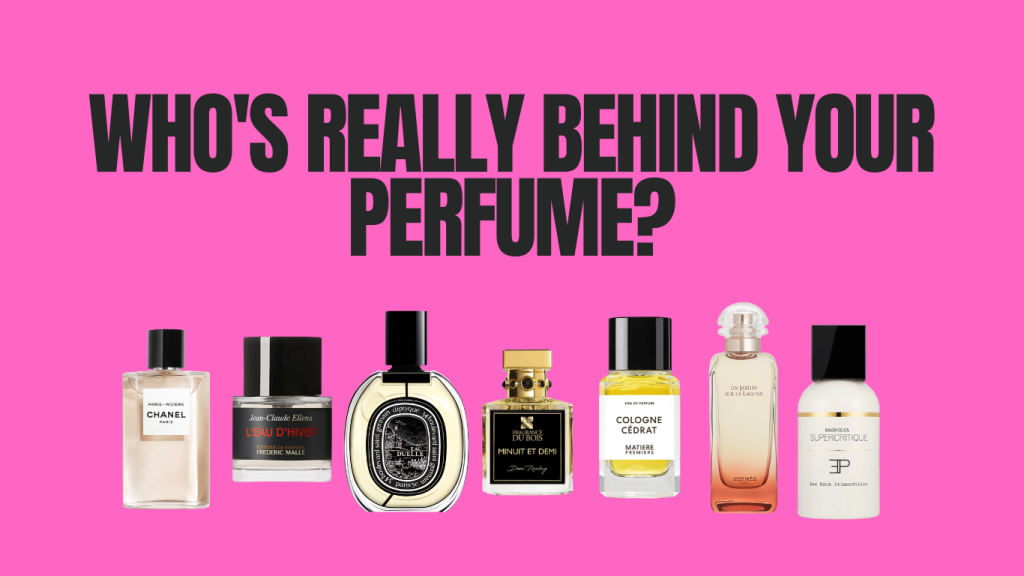
Meanwhile, consumers are not just uninformed, they’re misled. Influencer-driven demand and social media storytelling hide the truth: many of the most hyped brands, such as PDM and Initio are venture-backed shells with outsourced production. The truly artisanal houses, the ones that grow their own materials and create their own perfumes from start to finish, remain underrecognized.

Perfume will survive this. Art always finds a way. But we need to ask a harder question: should brands be required to disclose when a perfume was created with AI? Not just researched with it or named with help, but when the formula, the bottle design, the visuals, and the voice were generated by machines.
Perfume is not a necessity. It’s a cultural object, a luxury, a choice. Just because handbags can be mass-produced in factories doesn’t mean a hand-stitched leather piece should be treated the same. The same is true for scent. If a perfume was created by AI, consumers deserve to know. The difference between craftsmanship and code should not be hidden behind a marketing campaign.
Before the next scent bubble bursts, let’s ask: would you pay 300 dollars for a ChatGPT perfume? And if not, why are we buying them already?







Leave a Reply