

The Question No One Wanted to Answer
Two weeks ago, I sent an email to Bvlgari. It was a simple question: How are your perfumes produced? What followed was a chain of vague follow-ups, one phone call, and zero answers. One woman asked me, with suspicion, if I represented a production house. I don’t. I represent a consumer with a platform and a simple, honest curiosity. Where is my perfume made, and by whom? Still waiting to get an answer*. (Update 5/2/2025 see footer)
The Pattern of Evasion

This seemingly innocent inquiry turned into a much larger investigation. I reached out to other brands, asking if their production was in-house or outsourced. The responses I received were nearly identical, rehearsed, and evasive: “Our research and development is led by world-renowned perfumers and experts.” But that wasn’t the question. I wasn’t asking for the inspiration behind your latest bottle of sandalwood and saffron. I was asking whether you make it yourselves, or whether you contract it out to giants like Givaudan, Firmenich, Symrise, or IFF.
This silence spoke volumes.
A Bigger Wake-Up Call
Around the same time, a TikTok video exposing Chinese factories manufacturing luxury handbags started going viral. People were shocked to learn that their thousand-dollar bags, wrapped in European branding, may have been produced in the same facilities as mass-market goods. The brands denied it and accused them of exposing their own dupe production. Truth or not, it sparked a broader question for me: Who is behind my beloved perfumes?

I began to think seriously about where raw materials are sourced, how perfumes are manufactured, and whether, by wearing these beautiful objects of desire, I might unknowingly be contributing to environmental harm or labor abuses, even child exploitation.
When Perfume Becomes Storytelling, Not Craftsmanship
What I found disturbed me more than any dupe culture or fast fashion scandal. I found layers of opacity dressed up as luxury. Brands like Parfums de Marly presented themselves as regal, old-world houses with an aristocratic French spirit. But upon closer inspection, they do not make perfume. They license stories. The formulas, the bottles, the packaging, even the juice, outsourced. They are expert storytellers. Not perfumers.

My real problem lies with brands like Parfums de Marly who market themselves as niche and heritage when, in reality, they operate no differently than mainstream designer brands. Perhaps they use slightly higher quality ingredients, but the perfumes themselves are made by the same large-scale manufacturers producing for mass-market luxury. They sell the illusion of exclusivity, heritage and craftsmanship without embodying it. They are a shell.
Outsourcing Isn’t the Problem, Dishonesty Is
At first, I felt deceived and angry. I labeled them what many have: “fake niche.” But over time, I realized the issue isn’t that they’re marketing-driven or outsourced. Zara is outsourced. Zara is also transparent. No one buys a Zara dress expecting haute couture. The problem isn’t outsourcing; the problem is opacity. It’s the illusion of artisanal craftsmanship when none exists.
It’s important to be clear: I do not have an issue with the major perfume production houses themselves. Giants like Givaudan, Firmenich, and IFF often have the infrastructure to support responsible sourcing, rigorous safety testing, and sustainable practices. In many cases, they are more capable of ensuring environmental and ethical standards than tiny independent operations. My problem is not with scale. My problem is with dishonesty. When brands cloak themselves in a narrative of in-house artistry and heritage while quietly contracting the work out, they aren’t protecting craftsmanship, they are selling illusions and for a lot of money.
The Brands That Tell the Truth

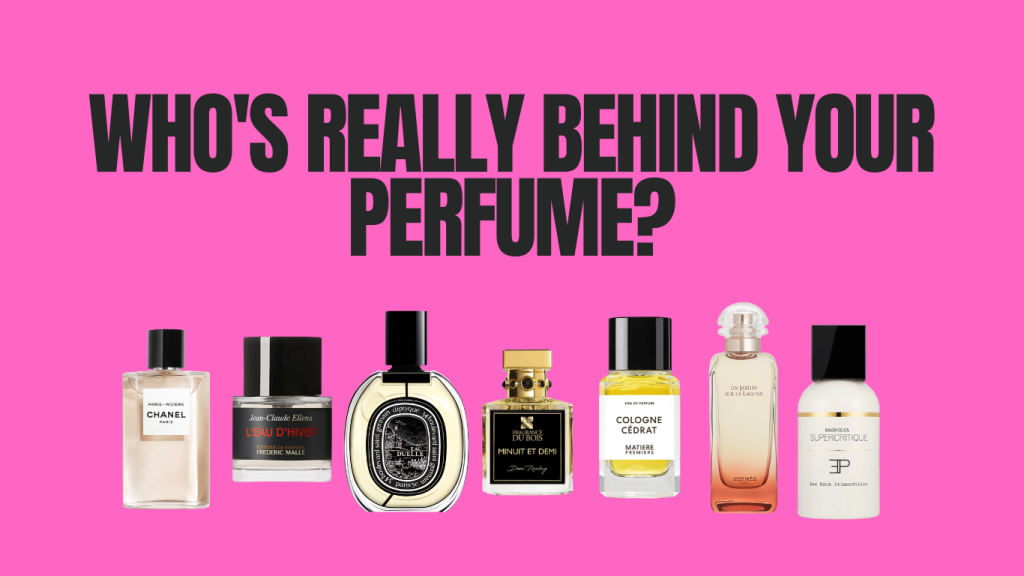
On the other side of the spectrum, there are brands that tell you exactly what they’re doing. Les Eaux Primordiales, for example, includes a card signed by the perfumer who made your fragrance. Ormonde Jayne produces in their own London lab. Matière Première not only formulates their perfumes in-house but cultivates many of their own raw materials. These are not just brands; they are creators.
Understanding the Landscape: The Real Categories of Perfume Houses

- Vertically Integrated Houses: Own their production and often control sourcing.
- Examples: Chanel, Ormonde Jayne, Matière Première, Les Indémodables, Guerlain
- Investor/Entrepreneur-Led with Outsourced Production: Founded by businesspeople, built on marketing, produced by external labs.
- Examples: Initio Parfums Privés, Parfums de Marly, Memo Paris, Mind Games, 7 Virtues
- Perfumer-Led but Outsourced: Creative vision comes from perfumers, but manufacturing is not in-house.
- Designer Mass-Market with No Transparency: Perfume as brand extension; production often outsourced with no clarity.
- Examples: YSL, Gucci, Prada, Valentino
- Artisanal, Small-Batch, Transparent: Independent or family-run, with a strong emphasis on honesty and craft.
- Examples: Zoologist, Scentcontrol by LKW, Hiram Green
- Conglomerate-Owned Niche: Once indie, now corporate-owned and mass produced.
- Examples: Le Labo, Byredo, Maison Francis Kurkdjian, Diptyque
Transparency Is the New Luxury
The point of this article isn’t to shame perfume lovers or delegitimize brands that outsource. Some of my favorite perfumes come from houses that don’t produce a single thing themselves. But we are in an age where transparency is the new luxury. We want to know where our food comes from, who made our clothes, and what’s in our skincare. Why should perfume be any different?

This is not about elitism or price. It’s about honesty. I would rather support a $250 perfume from a small house that tells me exactly who makes their juice than a $80 one that hides behind phrases like “olfactory artistry” while offering no concrete answers.
Who Really Wrote the Story?
Let us ask harder questions, not just about notes and longevity, but about integrity. The next time you’re enchanted by a story in a bottle, ask yourself: Who actually wrote it?
Because the truth is, some of them aren’t perfumers. They’re illusionists. What do you think?
*05/02/2025, we did get an update from Bulgari:
Dear Hulya Aksu,
Thank you for your patience.
Bvlgari fragrances are conceived and crafted entirely in-house, from initial design to the final olfactory composition. Production, including assembly and bottling, takes place in Italy near Milan. This commitment to Italian manufacturing is essential for the Roman company, underscoring its dedication to quality, meticulous detail, and superior craftsmanship.
Kindest regards,
BVLGARI





Leave a Reply