
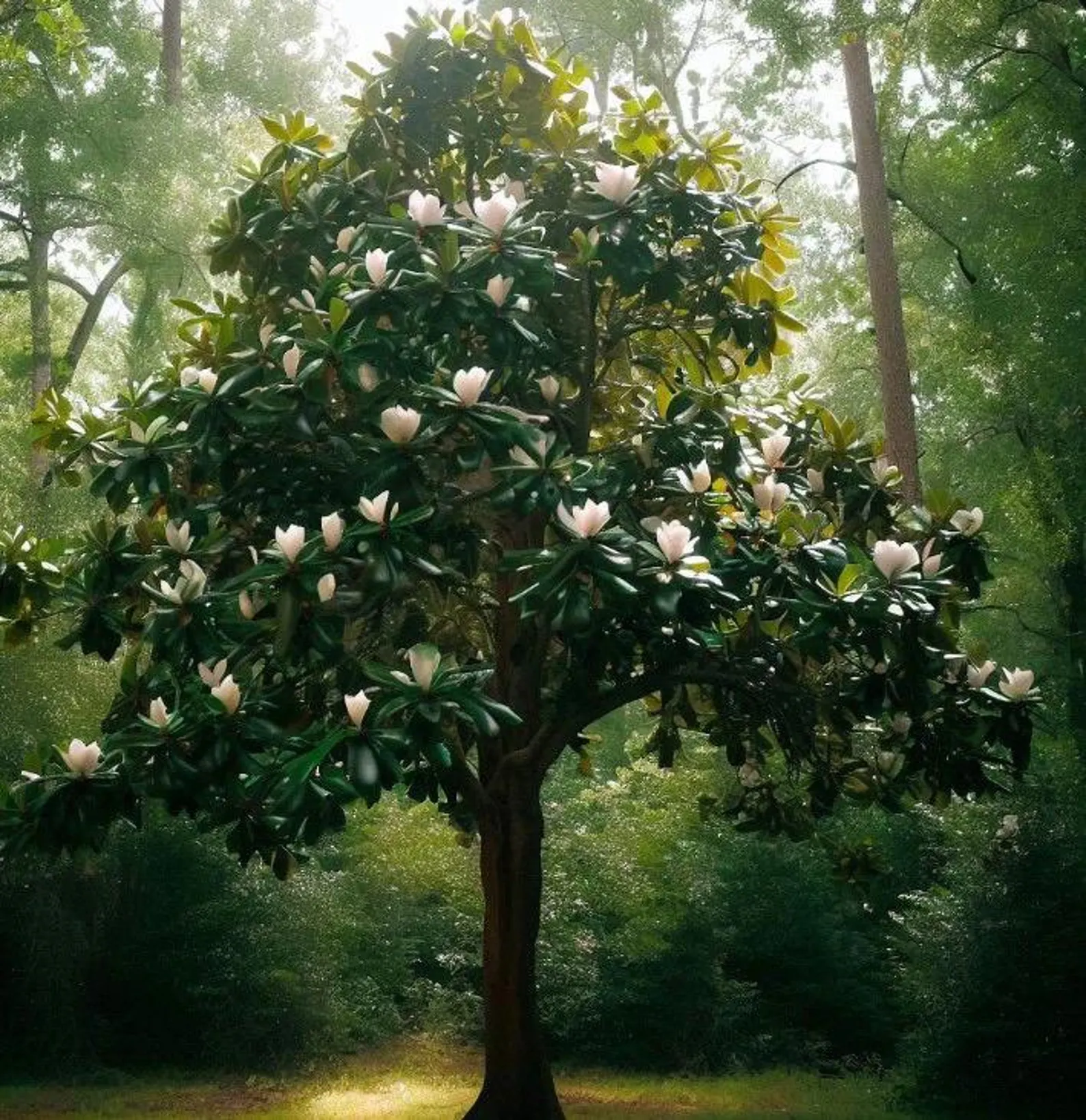
My husband and I were standing under a magnolia tree, smelling her creamy white flowers. I casually asked, “Would you call this heady?” Without missing a beat, he replied, “No, it’s indolic.” That brief exchange got me thinking: how many of us struggle to find the right words to describe what we smell?
The truth is, perfume language can be maddening. We throw around words like “animalic,” “resinous,” or “narcotic,” but even seasoned fragrance lovers sometimes pause and wonder: what does that actually mean? If you love perfume, read reviews, follow launches, or just want to express what you’re smelling with more clarity, this is for you.
It’s a simple vocabulary list with just enough detail to help you connect the dots between what you’re smelling and the language perfume lovers use every day.
The Vocabulary of Scent
Indolic
A polarizing term used to describe the slightly decaying, animalic quality of certain white florals. It’s not shy, think of jasmine left in the sun just a little too long.

- Smells like: Overripe fruit, candle smoke, human skin
- Common notes: Jasmine, tuberose, orange blossom, narcissus
- Why it matters: Adds sensuality and complexity
- Found in: Carnal Flower by Frédéric Malle
Heady
Lush, intoxicating, and room-filling. A heady floral doesn’t whisper, it arrives in a velvet gown.

- Smells like: Saturated blooms at their peak
- Common notes: Tuberose, gardenia, magnolia, jasmine sambac
- See also: Portrait of a Lady by Frederic Malle
Resinous
Sweet but not sugary. Warm, balsamic, and often linked to ritual or history. Resinous perfumes linger like incense smoke curling in a temple.

- Smells like: Amber, frankincense, tree sap
- Common notes: Labdanum, benzoin, myrrh, opoponax
- Try: Ambre Sultan by Serge Lutens
Animalic
Earthy, primal, and provocative. This is the opposite of clean, it’s pheromonal.

- Smells like: Fur, leather, sweat, skin
- Common notes: Civet, castoreum, oud, musk (natural or synthetic)
- Found in: Salome by Papillon
Narcotic
Hypnotic floral overload. Narcotic perfumes are lush to the point of dizzying, like lying in a garden at noon with the sun in your eyes.

- Smells like: Overwhelming florals with a dreamy edge
- Common notes: Tuberose, jasmine, ylang-ylang, narcissus
- Evoked by: Do Son by Diptyque
Powdery
Soft-focus, vintage, and feminine in the most deliberate way. Think silk slips and face powder compacts.

- Smells like: Orris, violet, heliotrope
- Common notes: Iris root, musk, tonka bean
- Examples: Infusion d’Iris
Soapy
Clean, light, and polished. Often aldehydic, always elegant. If powdery is chiffon, soapy is crisp white cotton.

- Smells like: High-end soap, fresh laundry, spring air
- Common notes: Aldehydes, neroli, iris, clean musks
- Iconic: Chanel No. 5
Creamy vs. Dry Woods
Woods can be soft or stark. Creamy woods feel like cashmere on skin; dry woods like cedar planks in sun.

- Creamy notes: Sandalwood, cashmeran, fig, coconut
- Examples: Santal Blush by Tom Ford, Tam Dao by Diptyque
- Dry notes: Vetiver, cedarwood, cypriol
- Examples: Sycomore by Chanel, Encre Noire by Lalique
Green
Fresh, bitter, and bright. Green scents evoke crushed stems, leaves, and early spring.

- Smells like: Garden walks, just-cut grass, tomato vines
- Common notes: Galbanum, violet leaf, petitgrain, green tea
- Favorites: Rose & Cuir, En Passant
How to Use This Vocabulary
When testing a fragrance, try asking yourself: Is this vanilla powdery (soft and nostalgic) or resinous (rich and syrupy)? When reading reviews, decode the language. A “green rose” might be grassy (Rose & Cuir) or bitter-stemmed (En Passant).
When you know what you love, this language becomes your guide, to new perfumes, deeper connections, and smarter choices.
Does It Matter
I think it does. Language is more than style, it’s precision. And in perfume, precision is freedom. It allows you to find what resonates, to explain what you love, and to fall more deeply in love with scent.
So next time you’re in your garden, or in a perfume boutique, pause and ask: What would I call this? The answer might surprise you.
What’s your favorite underrated perfume term? Share it below, we’d love to hear.
#PerfumeTermsExplained #FragranceVocabulary #WomenOver40 #ElevatedClassics #LuxuryPerfume






Leave a Reply