

Two Years of Industry Meddling, and Here Are My Two Scents
When I started Elevated Classics almost two years ago, I was not trying to enter the perfume machine. The original idea was wider than fragrance. I wanted to create a space around living with more discernment: better basics, better materials, better manners, better style. Not luxury as performance, not expense mistaken for taste, not consumption dressed up as refinement. I was interested in the quieter upgrade, the better version, the thing chosen with intention because it improved the texture of daily life.
Then perfume pulled me in.
At first, fragrance felt like the natural extension of everything I cared about. Perfume is intimate. It belongs to ritual, memory, seduction, identity, and presentation. It can change the way a woman walks into a room. It can make the ordinary feel composed. It can turn getting dressed into an act of self-possession. It is invisible, but it leaves evidence everywhere: on a coat collar, in a room, in another person’s memory, in the private confidence of the wearer.
Then I entered the social media side of fragrance, and the romance got loud.
Everywhere I looked, someone was telling people where their money should go. Buy this. Boycott that. Support this house. Avoid that corporation. This brand is real niche. That brand is fake niche. This perfumer deserves your money. That conglomerate does not. A self-taught perfumer with a ring light could declare an entire global beauty group morally bankrupt by noon, then promote their own bottle by dinner.
I resist that kind of certainty, especially when it comes without evidence.
I do not believe a small brand automatically deserves your money more than a large company. I do not believe artisanal is automatically better than corporate. I do not believe every perfume made through a major fragrance house is empty, compromised, or soulless. Some of the most extraordinary fragrances in the world have come from large houses with in-house perfumers, serious archives, technical discipline, quality control, and a culture of perfumery that many younger brands imitate from a distance.
I love Chanel. I love Hermès. I love Guerlain. I love Cartier. I love Serge Lutens. These are not little romantic operations hidden behind a stone wall in Provence, yet many of them preserve a relationship to authorship, craft, and institutional memory that still feels real. I also follow perfumers I admire wherever they create. If a perfumer whose work I respect makes something beautiful for a global brand, I am interested. If they compose for an independent house, I am interested. Talent does not become less talented because the invoice comes from a larger company.
The issue is not corporate scale.
The issue is costume.
The Costume of Authenticity
I am interested in the moment when perfume stops being honest about what it is.
Invented heritage. Borrowed château imagery. Founder mythology. Vague sourcing language. The suggestion of handcraft without any clarity around who composes, compounds, macerates, bottles, packages, or distributes the perfume. The modern niche house that uses the language of intimacy while depending on industrial anonymity.
That kind of storytelling can be beautiful from a distance. It can also become a fog machine.
The reverse fantasy bothers me just as much: the idea that smallness itself is proof of virtue. A private founder is not automatically more ethical because the company is small. A self-taught perfumer is not automatically more authentic because they reject the establishment. A brand is not automatically more honest because the founder answers Instagram comments personally. How do we know where the materials come from? How do we know who makes the concentrate? How do we know how the packaging is produced, how workers are treated, how suppliers operate, how claims are verified?
Often, we do not.
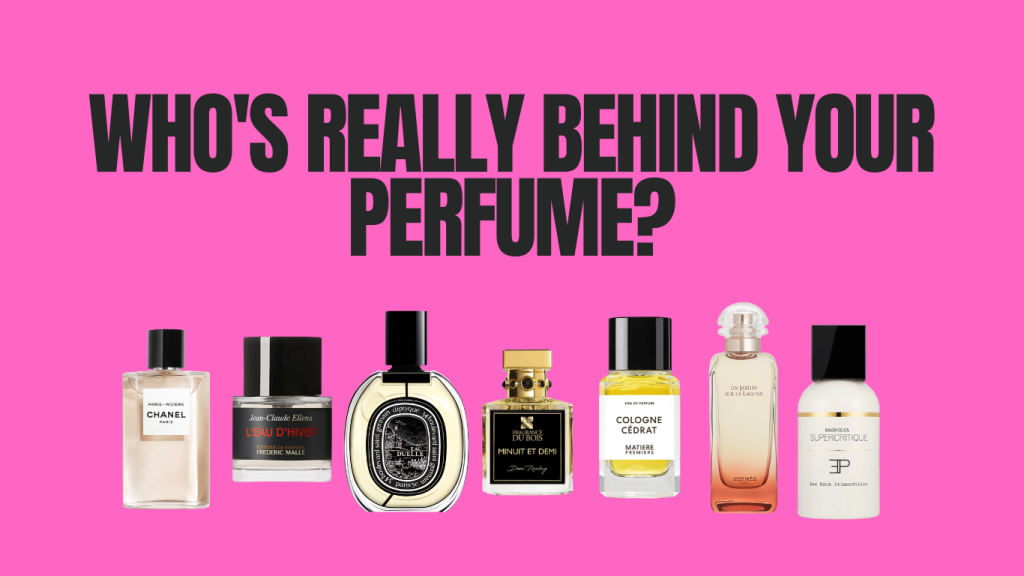
That is where Elevated Classics began to change. What started as a lifestyle platform became a place for investigating the story behind the bottle. I wanted founders, owners, perfumers, and creative directors to have room to explain what they were building, but I also wanted to ask the questions that turn a beautiful brand story into something more substantial. Where is the perfume made? Who composed it? Who financed the brand? Who owns the formula? Who controls production? Why was a particular lab chosen? What does the brand make in-house, and what does it outsource? Where does the language of craft meet actual craft?
The funny thing is, many brands say they want this conversation.
Until they receive the questions.
More often than people might imagine, brands agree to be interviewed and then disappear after I send the questions. Not after an attack. Not after rudeness. After basic questions about how they work. That tells me something. It tells me some brands want the glow of editorial coverage without the discomfort of being understood. They want to be called artisanal, independent, heritage, disruptive, rare, transparent, or sustainable, but they do not always want to explain what those words mean in practice.
I do not owe that system politeness.
I do not make my living from this. I am not protecting an affiliate structure. I am not trying to keep brands comfortable so they will send me the next bottle. I do not owe anyone a flattering story in exchange for access. That freedom is sometimes exhausting. It is also the only reason this work still feels honest.
The Fantasy of the Field
One of the examples that fascinates me is the way some modern fragrance brands talk about growing their own flowers.
On one level, I love it. The idea of a perfumer connected to land, harvest, terroir, and raw materials is deeply seductive. A rose field in Grasse is not meaningless. It can shape the identity of a house. It can give a perfumer a more intimate understanding of a material. It can connect a fragrance to place in a way that feels genuinely compelling.
Matière Première is a useful example because the brand has been more specific than many. The house states that Aurélien Guichard founded an organic Ecocert estate in Grasse in 2016, growing rose, tuberose, and lavender across more than six hectares. Its own language also emphasizes Guichard as a perfumer-founder deeply connected to raw materials.
I do not doubt the existence of the fields. I do not doubt the seriousness of the gesture. My question is about scale.
A field is not the same thing as a full supply chain.
When a brand says it grows its own roses, I want to know what that means inside a global commercial operation. How much land? How much yield? How much absolute? What percentage of the rose used in the finished perfume comes from the brand’s own harvest? What is supplemented through outside suppliers? Is the estate material present in every batch, or is it a symbolic anchor in the story? Is the field the source, the signature, or the visual shorthand?
I am not accusing anyone of lying. I am saying the language is often too complete for the reality.
A brand can own land, grow flowers, work with a major fragrance company, buy additional materials through suppliers, and still make excellent perfume. That does not bother me. What bothers me is partial vertical integration marketed as total intimacy.
If the honest sentence is, “We grow a portion of the rose used in this fragrance and supplement the rest through trusted suppliers,” say that. It does not make the perfume less beautiful. It makes the story more believable.
The Problem Is Not Givaudan
I have had to confront my own bias here.
I am personally drawn to perfume houses that feel close to materials and process. I like brands that work with serious independent labs, with people like Rémi Pulverail and L’Atelier Français des Matières, where the conversation begins with raw materials, extraction, sourcing, and technical knowledge. I am moved by houses that can speak clearly about who made the perfume, who supplied the materials, and why a particular route was chosen.
Given the choice, I often prefer buying from brands with that kind of traceability. That is my honest preference.
But preference is not proof.
The major fragrance companies are not villains in the perfume story. Givaudan, IFF, Firmenich, Robertet, Takasago and others hold enormous technical knowledge. They employ brilliant perfumers. They create materials, maintain safety standards, support consistency, and make possible many perfumes people deeply love. The issue is whether the consumer is allowed to understand the relationship.
I felt this personally with Ormonde Jayne. I admire Linda Pilkington. I associate Ormonde Jayne with refinement, independence, control, and a very specific British elegance. So when I learned that the lab connected to the brand’s perfume production had been acquired by Givaudan, my first reaction was disappointment.
Then I had to stop myself.
Was I reacting to a real change in quality, or to the disruption of my own fantasy of independence?
That is the uncomfortable part. We want the independent house to remain untouched. We want the atelier, the founder, the lab, the perfumer, and the bottle to remain beautifully aligned forever. But brands grow. Suppliers are acquired. Labs change hands. A global company can enter the picture without automatically erasing the creative identity of every brand connected to it.
Purity was never the right standard. Clarity is the more useful one.
What changed? What did not change? Who is making the perfume now? Who controls the formula? Who controls the production decisions? Is the brand willing to explain the difference? That is the kind of conversation I want fragrance writing to make space for.
The Consumer Is Not the Problem
Here is the part that makes all of this complicated: most people will never ask any of these questions.
Most consumers want to know if a perfume smells good, lasts long, brings compliments, fits their budget, and makes them feel attractive. That is not shallow. That is how most people engage with beauty. Perfume should not require a graduate degree in supply chains before someone can enjoy a bottle.
This is why dupe culture has exploded.
When the fragrance industry asks people to pay $300, $450, or $700 for a bottle while offering very little clarity about who made it, what is inside it, why it costs that much, or how much of the story is material reality versus marketing, many consumers will look elsewhere. If a $40 perfume gives them the same mood, the same compliment, the same sweet cloud in the elevator, they may not care whether the original used a rare natural, a captive molecule, a famous perfumer, or a century of brand history.
And honestly, I understand that.
The burden of fixing the fragrance industry should not fall on the average person standing between groceries, rent, childcare, and a bottle of perfume. Consumers should not need to become investigators to enjoy smelling good. The burden belongs higher up: with brands, retailers, marketers, media, and anyone profiting from opacity while selling romance at luxury prices.
But there is another audience too.
There are people who want to know. Not because they are snobs. Not because they want to police pleasure. Because they understand that perfume is more than a smell. It is agriculture, chemistry, authorship, manufacturing, distribution, pricing, history, and imagination. A bottle contains decisions. Some are beautiful. Some are cynical. Most are complicated.
That is the audience I write for.
Viral Culture Has Made Perfume Bigger and Smaller at the Same Time
The fragrance industry is growing at atomic speed. There are more launches, more founders, more discovery sets, more “artisanal” brands, more extrait versions, more limited editions, more dupe houses, more influencers, more affiliate links, more haul videos, and more people calling themselves collectors after six months of blind buying.
The market looks enormous. The conversation often feels smaller.
MDCI is a perfect example of what gets lost. Parfums MDCI is not a one-hit viral house. It is an independent French brand founded in 2003, with a portfolio shaped in collaboration with major perfumers including Pierre Bourdon, Bertrand Duchaufour, Francis Kurkdjian, Stéphanie Bakouche, Cécile Zarokian, Patricia de Nicolaï, and Nathalie Feisthauer. Yet the public conversation often narrows around the few bottles that become most visible online, especially Chypre Palatin, Invasion Barbare, and Peche Cardinal.
That is not because the rest of the house lacks value. It is because the algorithm has a very small appetite dressed up as discovery.
A brand can have a deep portfolio, serious compositions, and years of work behind it, yet the consumer conversation collapses around the fragrances that perform best on social media. The others become invisible, not because they failed artistically, but because they did not become content.
That is narrowing disguised as abundance.
People think they are exploring more because they are seeing more content. Often they are being pushed toward the same handful of names, the same notes, the same performance claims, the same bottles, the same adjectives, the same value system that treats projection as proof of quality.
Perfume social media has made the industry visible to more people than ever. That part is exciting. Visibility, however, should not be mistaken for understanding.
Loud Is Not the Same as Luxurious
I am not against aroma chemicals.
Modern perfumery would not exist without them. Some of the most beautiful perfumes ever made depend on synthetics. Chanel, Hermès, Guerlain, Serge Lutens, and nearly every serious perfume house use them with intelligence, elegance, and purpose. The problem is not the molecule. The problem is when projection becomes the entire value system.
We now have a market where “monster performance” is treated as proof of quality. A perfume can be loud, durable, and technically effective, and suddenly it is praised as luxurious. But volume alone is not craftsmanship. Longevity alone is not beauty. Filling a room is not the same as composing a fragrance with shape, texture, evolution, and emotional intelligence.
Some consumers love that kind of power, and they are allowed to love it. My interest is in the difference between a perfume that performs and a perfume that is composed. Those are not always the same thing.
The Collector as Content Machine
There is another part of this culture I cannot ignore.
A lot of perfume content is no longer really about perfume. It is about acquisition. The constant hauls. The blind-buy spirals. The “run, don’t walk” urgency. The endless justification of another bottle, another backup, another flanker, another discovery set, another expensive extrait that smells almost exactly like the eau de parfum released two years earlier.
Some collectors are deeply knowledgeable. Some are generous, thoughtful, and serious. I have learned from many of them. But the current algorithm rewards speed, volume, novelty, and emotional urgency. A perfume is unboxed before it is understood. A fragrance is reviewed before it has been worn through weather, fabric, skin, mood, and time. Bottles arrive faster than opinions can mature.
There is also a new conversation happening around GLP-1 medications, appetite, reward, craving, and compulsive behavior. Researchers are studying how GLP-1 receptor agonists may affect reward pathways, cue reactivity, impulsivity, and addiction-related behaviors. Washington University School of Medicine reported in 2026 that GLP-1 use was associated with reductions in substance use disorder outcomes in a large study, while Brown University researchers have described ongoing work around craving, cue reactivity, impulsivity, and executive function.
I am not a doctor, and I am not making a medical claim about perfume collecting. I am writing as a lay observer inside beauty culture, where people openly talk about shifts in appetite, fixation, reward, and consumption. Whether the trigger is medication, algorithmic exposure, emotional regulation, boredom, status, loneliness, or simple pleasure, the result inside perfume culture often looks the same: more wanting, more buying, more posting, more justification.
The industry benefits from that. The platforms benefit from that. The consumer is left calling it passion.
Sometimes it is passion.
Sometimes it is something else wearing perfume.
Why I Keep Doing It
I struggle with this work more often than people might imagine.
There are days when I want to stop, usually after I have spent too much time inside the perfume content cycle and begin to wonder whether participating in it makes me complicit in the very machine I criticize. I do not want to turn fragrance into more noise. I do not want to perform expertise for attention, flatter brands for access, or pretend every bottle deserves a mythology simply because it arrived with a press release and a beautiful image.
This work is expensive, time-consuming, emotionally draining, and often absurdly impractical. It does not pay me. There is no empire behind it, no affiliate machine to protect, no commercial arrangement that requires me to keep anyone comfortable. In the traditional sense, I have very little to lose.
That freedom is sometimes lonely. It is also the only reason the work still feels honest.
Every time I think I am done, I speak to someone who reminds me why perfume is worth taking seriously. A founder who can explain why a particular lab was chosen. A perfumer who talks about materials with the precision of someone who has lived with them. A creative director who admits the compromises of growth without hiding behind poetry. A small house that understands scale without pretending to be untouched by it. A heritage brand that still has enough memory to know what it stands for.
Those conversations bring me back.
The real story, when someone is willing to tell it, is still worth the trouble.
What Elevated Classics Is Becoming
Two years in, I understand Elevated Classics more clearly than I did when I began.
It has become a place for the story behind the bottle: the field before the formula, the perfumer before the launch campaign, the founder before the fantasy, the factory before the price tag, the decision before the desire.
I want to give founders, owners, perfumers, and creative directors the room to explain what they are building, but I also want to ask the questions that turn a beautiful brand story into something more substantial. Who founded the house? Who composed the perfume? Who produces it? What does the brand control? What does it outsource? Why did it choose that route? Where does the language of craft meet actual craft? Where does heritage become history, and where does it become theater? What does rarity mean when a bottle is everywhere? What does luxury mean when the story is more polished than the structure behind it?
This is the part of perfume that fascinates me most: the hidden architecture. Not only how something smells, but how it came to exist. The people, the labs, the fields, the factories, the suppliers, the ambitions, the compromises, the costs, the mistakes, the inconvenient truths, the beautiful choices, the decisions no consumer sees but every consumer eventually wears.
That is where I want Elevated Classics to live.
In the space between beauty and business.
Between romance and receipts.
Between the first spray and the question of who made it possible.
The Elevated Classics Manifesto
I believe transparency is more useful than purity, because purity is often a fantasy and transparency gives us something more valuable: the ability to understand.
I believe scale can produce beauty when it is handled with intelligence, memory, technical discipline, and respect for the work. I also believe smallness can be beautiful when it is more than an aesthetic. A global house can make something extraordinary. A small house can hide behind its own mythology. Size does not tell the whole story. Structure does.
I believe in naming perfumers, not as a formality, but as an act of authorship. I follow the work of perfumers I admire across brands, budgets, ownership structures, and categories because talent does not become less interesting when it moves through a larger house, and artistry does not become more sacred simply because the brand is independent.
I believe consumers deserve to know who made the concentrate, who supplied the materials, who bottled the perfume, who owns the brand, and who benefits from the story. Every purchase does not need to become an investigation, but luxury should be able to explain itself.
I believe in pleasure without consumer shame. A person should be allowed to buy the $40 perfume if that is what brings joy, confidence, compliments, or a little beauty into a difficult week. That pleasure does not need to be policed by people with larger budgets, bigger collections, or more sophisticated vocabularies. At the same time, people should be allowed to ask why the $400 perfume costs $400, and whether the answer lives in the materials, the perfumer, the production, the brand history, the bottle, the distribution, or simply the mood board.
I believe natural materials are not automatically superior, synthetics are not automatically cheap, and projection is not the same as quality. Modern perfumery is built on the intelligence of both nature and chemistry. The issue is how materials are used, how they are priced, how they are described, and whether loudness is being sold as craftsmanship.
I believe a brand that grows roses should be proud enough to explain how much of those roses actually enter the perfume. I believe heritage should be traceable, not invented in a campaign deck. I believe craft can exist in a laboratory, a factory, a farm, a founder’s studio, or a major house, but it should never need to hide behind vague language.
I believe perfume writing can be more generous, more rigorous, and more alive than compliments, hauls, rankings, and affiliate links. It can hold beauty and skepticism in the same hand. It can admire without surrendering judgment. It can love the fantasy while still asking whether the fantasy has a foundation.
And after all of this, I still love perfume.
I love the bottle, the first spray, the private decision of choosing who I want to be that day. I love the way a fragrance can make a woman feel composed before anyone else sees her. I love the memory, the ritual, the vanity tray, the scarf that still carries yesterday’s scent, the coat collar that smells beautiful the next morning. I love the unreasonable power of something invisible to change the atmosphere around a person.
I love perfume too much to let it become only noise.
So this is the work I am building now: a record of the real stories behind fragrance, told with beauty, curiosity, pressure, and respect for the intelligence of the reader.
Not to ruin the fantasy.
To find out which fantasies are real enough to keep.




Leave a Reply