
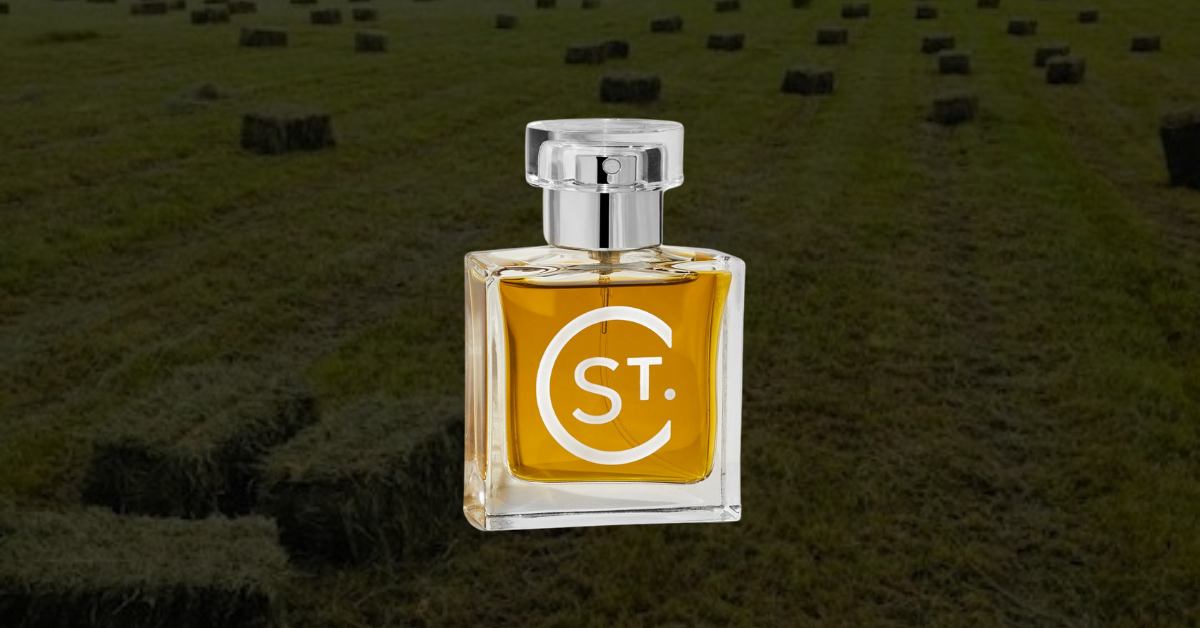
Before she ever made perfume, Diane St. Clair made butter. Not just any butter, but the kind that carried a sense of place. The grass. The season. The weather. From her small farm in Vermont’s Champlain Valley, she supplied The French Laundry and other fine restaurants that prized the quiet luxury of something made entirely by hand.
Estimated reading time: 13 minutes
That same devotion to process shaped her turn to perfumery. In 2014, while still running her dairy, St. Clair began studying scent on her own. The smells of hay, cream, and the barn had already trained her nose. A single class in New York lit the match. Today she is one of the rare perfumers who controls every step. She sources materials, builds her own accords, compounds, bottles, labels, and ships, alone.
When I wore her perfumes on skin, what struck me immediately was how built they are. They do not sit in one register. They move. You get the impact of the opening, then a drop into the heart, then hours of evolution that feel deliberate rather than accidental. It is less “here are the top notes” and more an unfolding story, the way light changes from morning to late afternoon.

You can feel that structure in the way she develops an idea. Gardener’s Glove starts with sharp green tomato leaf, bitter galbanum, and crushed vines, then settles into warm, worked leather and resin, like the inside of a glove that has held sun and soil. Eve and Pandora open with a bitter, breathing apple accord that feels like real fruit in air, not confection. They drift through rose and jasmine before finishing in a dense, buttery orris that clings to skin. Casablanca begins with citrus and ripe fruit before turning toward tuberose, moss, and a soft animalic hum that reads intimate, lived-in, human. None of it smells thin. You could set them beside certain vintage extraits and the comparison would be fair.

Her more recent works, Armor and Sanctuary, carry that same intention into the human world. Both were born from her response to threats against women’s autonomy and safety, translating anger and protection into scent. For St. Clair, perfume is not escape. It is a medium, a way to say something.
In this conversation, she reflects on building work that is meant to be felt, not just smelled. She talks about the discipline of small-batch production, the patience of real formula development, and the belief that perfume can hold memory, grief, desire, and protest in equal measure.
In Conversation with Diane St. Clair, Founder of St. Clair Scents

Craft and Philosophy
You often describe St. Clair Scents as small-batch and handmade. Many brands use those words, but in your case it is literal. You formulate, compound, and bottle everything yourself.
What does small-batch actually look like in your studio, and how do you preserve that intimacy while keeping consistency from one batch to the next?
I am indeed one of the few perfumers making small batch and handmade perfume, from start to finish, as a one woman show.
I formulate, compound, bottle, pack and ship everything myself. I also order all of my fragrance materials, bottles, and shipping materials myself. I do all of my own marketing (not that there is a lot of that). I also take care of regulatory requirements, sending my formulas out for compliance and taking care of safety data. I answer customer inquiries and send out newsletters. I often send out cards with new perfume releases, giving customers a visual cue for the scent. I work with artists to create these cards, and love this aspect of my work.
There is a constant juggling between keeping my 12 existing perfumes in stock, while also wanting to create new scents, the latter of which all perfumers want to do.
In terms of formulation, I like to make my own perfumes because it allows me to use the best materials that I can find, across a variety of fragrance houses and sources. If you use a fragrance house or particular lab to formulate your perfumes, they will most likely use one source for all of their materials. The downside of using different sources is that your supplier may run out of an ingredient or supply chains may stop making an ingredient. I find that this happens rarely. There are times when a material may be restricted by IFRA and a formula will need to be tweaked or changed. This happens to all perfumers however.
From Conception to Creation
Each St. Clair perfume feels anchored in a lived experience: hay drying in summer, a garden glove, the stillness of frost. Your perfumes seem to begin with emotion before formula.
When an idea first appears, how do you shape it into a finished perfume? Can you describe the path from inspiration to final bottle?
The path from conception to creation is the most exciting aspect of this art form for me.
First there has to be a gripping idea, for example, how do I really explain to people the beauty and complexity of the natural world (Blue Marble), or how can I build a perfume that shows my longing to escape a frigid Vermont winter and land in a tropical oasis (Casablanca), or how do I challenge the idea that curious women are not to be punished (Pandora and Eve), but should be celebrated for their audacious curiosity?
Once I have an idea (whether it comes up through painting, myth, nature, poetry, current events, etc.), I usually dive into research. Once I find the key elements that I want to highlight in the story, I need to think about how to translate these concepts through scent.

For example, my last two perfumes, Armor and Sanctuary, were inspired by my dismay at the current trend toward curtailing women’s right to reproductive choice in the US. At the same time, the horrific trial in France revealing the crimes committed by Gisele Pelicot’s husband and other men accused of raping her for years made me feel like women’s bodily safety was deeply threatened. This brought to mind Barbara Krueger’s bold art piece entitled “Your Body is a Battlefield” created for the 1989 Women’s March on Washington.
How would I take these ideas and transform them into perfume? I knew that I wanted to create a fragrance that would make women feel empowered as well as strong. I usually build my perfumes from the bottom up. I wanted Armor to start with powerful “forces,” which were represented by smoky vetiver, labdanum, tobacco, animalics, patchouli, and benzoin. But I then wanted the axis to shift to aromas of light, strength and liberation. I employed these through immortelle, frankincense, davana, black currant bud, rose and citrus such as yuzu, grapefruit, and red mandarin. I wanted this to create a beautiful armor.
As Armor evolved, I realized that I also wanted there to be a fragrance of safety and healing. Sanctuary was created with scattered mosses, watery materials (calone and helional), iris materials, greenery and fruit to create something quieter, more intimate and healing. These were the two forces, strength and empowerment along with survival and healing. The artwork for this project was created by a Scottish perfume critic and photographer who did a brilliant flower shot representing misogyny. The card of his photo accompanied the release of these perfumes.
How did I choose these materials? It is hard to explain, but I think all perfumers have to figure out how their materials represent abstract elements of the world to them. Materials also have to be considered for their textures and the sensations that they create in blends. Then you have to figure out how to dose the materials to get the effect that you want. There is a huge amount of trial and error and learning over time. One also develops a style or evolves different styles across one’s work. I often play with contrasts (light and dark materials). I also try to explore new materials with different perfumes. For example, Moving On was an exploration of darkness and light, allowing me to work in depth with aldehydes, which are always tricky.
From Idea to Market
Working from a farm in Vermont is far from the fragrance capitals that often dictate trends. You release perfumes slowly, and each feels intentional.
How do you decide when a perfume is ready for the world, and how do you know it brings something new to the conversation?
As you point out, my farm is very far away from the places that dictate trends in perfume. And I really pay no attention to trends.
I make perfume because I love working in scent, and I feel motivated to speak out about things that are important to me, using perfume as a medium. I do not think that people who buy my fragrances care about trends. I think they care about the topics that my work focuses on and like wearing my perfumes. I think they appreciate my transparency and my honesty.
Deciding when a perfume is ready for the world is one of the hardest things for a perfumer to do. In my case, it is harder than for most, since I do not have market evaluators or any evaluator. Artisans are uniquely challenged in this area, since one can actually become anosmic to what one is creating over time and find it difficult to be objective about the work. It is best if you can try working on more than one project, so that you are not always smelling the same thing.
It was great for me to produce a fragrance for the brand American Perfumer. Working together with its founder Dave Kern, it was refreshing to get feedback on my work from someone else. The perfume I created for them “Call Me” was a finalist in the independent category of Art and Olfaction in 2024. Whenever possible, I try and have a few trusted friends with good noses sniff my work to see how others are perceiving it.
Not having nearby access to perfumers to bounce things off of is definitely a handicap for me.
Materials and Technique
Blending naturals with synthetics requires not only intuition but also a grasp of chemistry and stability. You have developed this skill independently, outside the structure of a perfume school.
How did you build that knowledge, and what has experience taught you about marrying the technical and emotional sides of composition?
I will admit that I am not a chemist. But many commercial perfumers will say that it is not necessary to be a chemist, though it can be helpful. I also have no doubt that it takes more time to learn this on your own, by trial and error, than in the context of a perfumery program being taught by commercial perfumers. Given the fact that there are a very limited number of these schools, which take a small number of students, it is now impossible for all the people who want to become perfumers to attend these schools.
I have developed all of my blending skills outside of perfumery school. It is a matter of learning about your materials and how they may act in a blend, as well as using them and seeing what happens. The industry often develops lots of variations for “effects” in perfumery. For example, there are many “watery” or marine synthetics, for example, calone, adoxal, helional, cascalone, neofolione, precyclemone B, scentenal, etc. They all bring slightly different aspects of “watery” to the table and a perfumer has to find the differences between them as well as the right application for whatever ozone or marine or fresh or green aspect you are searching for. This is why perfumers often make so many mods, to find just the right ingredient, possibly out of many available, to achieve the effect you want. As you suggest, you have to learn how an ingredient performs chemically and part of that is whether it is giving you the effect you want to achieve in the perfume, whether it be emotional or thematic or textural or all of these.
The Future of Artisanal Perfumery
You are part of a small but growing circle of American perfumers who value transparency and authorship over scale.
Where do you see artisanal perfumery heading in the next decade, and what do you hope people will begin to appreciate more when they talk about authenticity in scent?
I think that we will see more and more artisanal perfumers, as it is easier to find materials and instruction online. I also expect that we will see more and more AI created perfumes. I think that this may create a market for scents that are crafted by real people who can explain the intent and process behind their creations. I also anticipate that there will be more segmentation of fragrance stores, with larger ones (maybe like Sephora) selling independent brands and smaller, curated spaces offering different kinds of artisan creators or perfume styles. It will be interesting to see what happens.
Speaking with Diane St. Clair feels like stepping into a slower rhythm of life. She talks about perfume the way she once talked about butter. Texture first. Integrity first. Time first. She is not interested in “notes” as marketing language. She is interested in what happens on skin over hours, and whether the perfume tells the truth while it is there.
Her perfumes behave that way. They are not one-tone. They open with presence, deepen quietly, and end in something almost private. Pandora begins with a shadowed apple and green rose, then fades into soft orris and leather, like an old handbag that has held too many memories. Gardener’s Glove starts as crushed stems and tomato leaf, then dries down to warm leather and resin, the scent of work still on the hands. Casablanca moves from citrus to a full animalic base with moss and floral heat. It feels unapologetically perfumey in a way the industry has almost forgotten how to make.

Much of what now passes for “artisanal” perfume is branding more than composition, charming ideas, quick formulas, and little structure. St. Clair is not doing that. She is building architecture. She is thinking about proportion, air, weight, and the chemistry of skin. Her perfumes do not flatter; they inhabit.
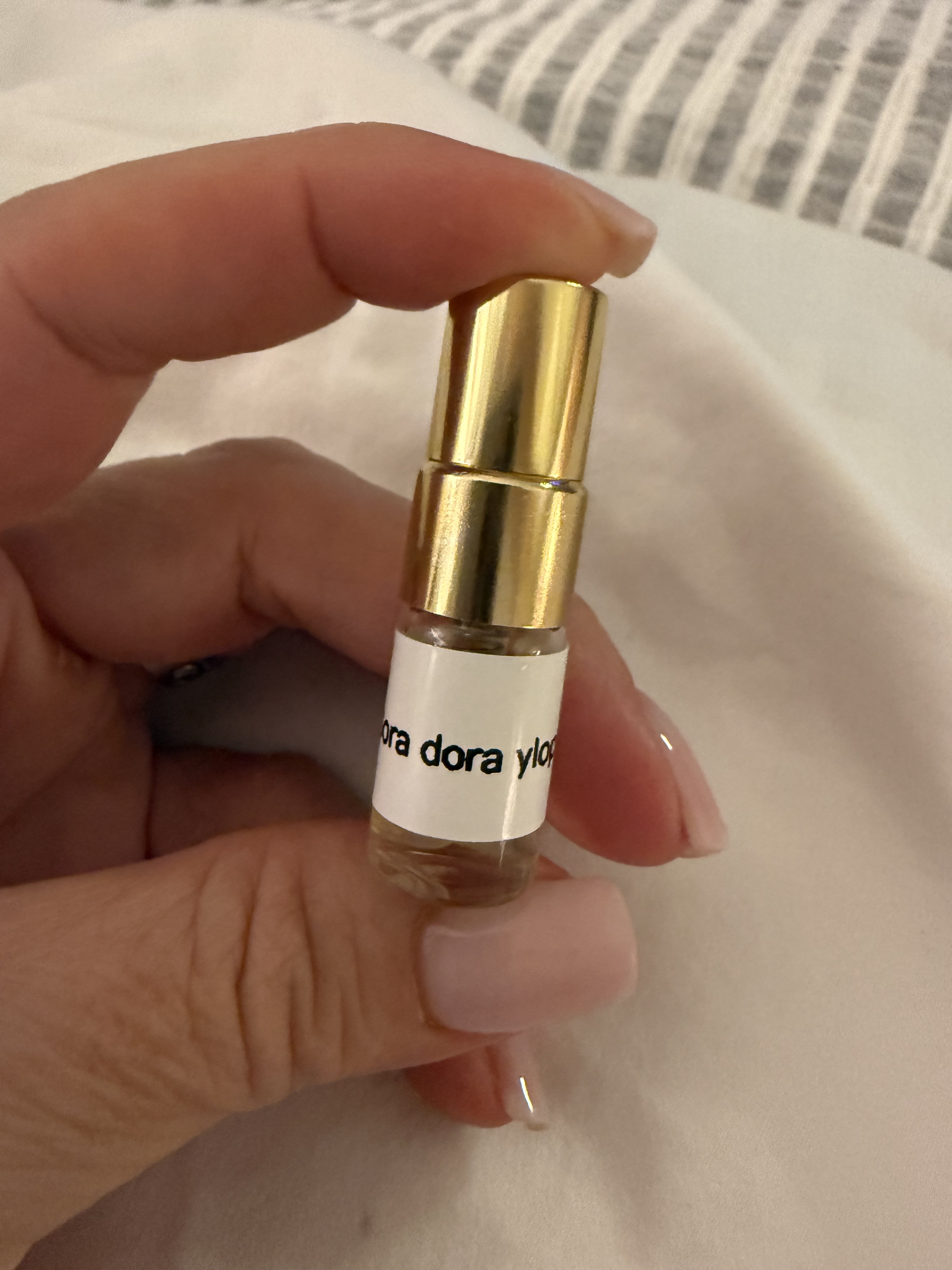
Diane sent me her full set of samples. They were dabbers, which I generally try to avoid, but I wore them with care, properly, one by one, giving them time to breathe. I am not a critic, but this is my observation. Most of them lingered beautifully. I ended up loving Eve, Pandora, and Armor in particular. They felt intelligent and deeply human, with a sincerity that is rare in contemporary perfumery.
What makes her work remarkable is not only that she does it alone, it is that she chooses to. Her solitude is not isolation; it is control. She sources, blends, bottles, and tests everything herself, waiting until a perfume says what she needs it to say. In a culture of speed and excess, she stands for patience. “I make perfume because I love working in scent,” she told me, “and I feel motivated to speak out about things that are important to me, using perfume as a medium.”
For Diane St. Clair, the art of perfumery is not about escape. It is about being awake to the world. Soil and frost. Animal and flower. Anger and tenderness. Skin and time.
Gardener’s Glove in 2019: Artisan Finalist
Eve in 2020: Artisan Finalist
Call Me in 2024: Independent Finalist
Blue Marble in 2025: Artisan Finalist
Elevated Classics Classification
Category: Artisanal Perfume House
Tags: Vertically Integrated | Independent | Narrative-Driven | One-Woman Production | Olfactory Advocacy


Leave a Reply