
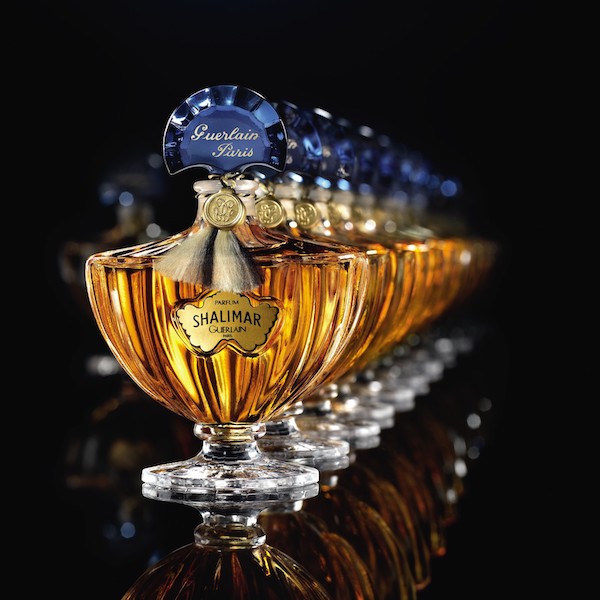
When a century-old legend still feels modern on skin.
When I wrote Shalimar at 100: The Story, the Scandal, and the Survival of an Icon earlier this month, I explored the legacy of Guerlain’s most enduring perfume, the artistry, the controversies, and the new voice that has carried it into its second century. That piece looked at the house, its past, and its people. This one is more personal. It’s about what happens when you actually wear Shalimar again, without nostalgia, without reverence, and discover that the story is far from finished.
A Second Look
I had convinced myself that I didn’t like the original Shalimar. I thought it was too powdery, too distant from the kind of perfumes I love now, modern florals, radiant woods, clean musks. Then, after reviewing Shalimar L’Essence, Guerlain’s new centenary edition, I was flooded with messages asking why I loved the flanker but not “the real one.” I went to answer and realized I couldn’t remember why.

So I started over. I obtained a fresh bottle of the classic Eau de Parfum, cleared my head, and gave it time on skin. I wasn’t prepared for how different it felt.
The Architecture of Desire
The opening is sharp and luminous, almost too much at first. Bergamot and lemon flash like a match being struck. For a moment, it smells austere, but the heat beneath it rises quickly, vanilla, balsam, and the faintest trace of smoke. It’s that meeting of light and shadow that keeps Shalimar from ever feeling simple.

As it unfolds, iris and jasmine move in quietly, softening the structure. The florals aren’t ornamental; they give texture and breath. The powder that once felt heavy to me now reads as silk. It’s the calm center of the perfume, holding the composition together.
Then comes the base, the part people still describe as legendary. Vanilla, tonka, and opoponax melt into something textured and warm. It feels less like sweetness and more like the trace of something expensive, a fabric warmed by skin. The smoke lingers softly, the way a candle glows after you’ve blown it out.
Wearing a Classic Now
Smelling Shalimar today is an experience of contrast. It feels familiar but also startlingly modern. It doesn’t behave like a “heritage” perfume. There’s no nostalgia baked into the formula, only balance and confidence. The sweetness is quiet, the warmth alive, the proportions exact.
It’s easy to see why it unsettles people used to sugar, pear, and musk. Shalimar is physical, not pretty. It doesn’t perform for others. It exists in its own rhythm, one that moves slowly, intimately, like breathing.
The Shadow of History
In my earlier piece, I wrote about Shalimar’s complicated past, the Orientalist fantasy behind its name, the colonial lens through which early perfumery imagined “the East.” Those critiques matter. They explain how beauty and bias can coexist within the same object. But once you understand that context, something else reveals itself.

Jacques Guerlain didn’t invent sensuality; he translated it. He used the materials of his time, vanillin, opoponax, iris, smoke, to build texture, to mimic the scent of skin after warmth. What’s striking now is not how exotic Shalimar is, but how human it feels. Beneath the mythology is an astonishingly modern idea: perfume as atmosphere, not ornament.
The Conversation Between Eras
Shalimar L’Essence was designed as an homage, but it also functions as a bridge. Where the original moves in chiaroscuro, light and shadow, the new edition holds steady light. Delphine Jelk’s hand is graceful and deliberate. She refines the original’s contrast rather than replacing it.

Wearing them side by side is like comparing a black-and-white film to its restored version. The story is the same, but the tone has changed. The 1925 formula feels mysterious and instinctive; the 2025 version feels fluent, almost architectural. Each makes the other stronger.
A Personal Reckoning
I understand now why people devote their entire lives to Shalimar. It’s not just a perfume; it’s a study in control. Everything about it, its restraint, its quiet heat, its composure, feels intentional. When you strip away its myth and its scandal, what remains is extraordinary craftsmanship.
I had spent years thinking it wasn’t for me. Now, I realize it simply wasn’t for who I was then. There’s a maturity in its softness, a kind of unspoken authority.
What Endures
A hundred years later, Shalimar still defines the tension between creation and reinterpretation, between history and renewal. Writing about it once gave me the facts. Wearing it gave me the understanding.
It reminds me that true icons survive not because they stay the same, but because they adapt to how we change around them. On my skin, Shalimar doesn’t feel like the past. It feels like continuity, still luminous, still composed, still alive as perfumes do, on the edge of memory.
Tell me, how does Shalimar wear on you? Do you love the original, or has the new L’Essence stolen your heart?




Leave a Reply