

My introduction to Maison Violet began in the most unexpected way: a quiet evening at home, scrolling through YouTube. I landed on an interview from The Perfume Guy, and there was Anthony Toulemonde, one of three co-founders behind the revived French perfume house. His English was flawless, his manner warm and deliberate, and there was an ease in the way he spoke about perfume that made me want to listen longer. Within minutes, my curiosity was piqued, not just about the man speaking, but about the history behind the name on the bottles in front of him.

Maison Violet began life in Paris in 1827, founded by François-Étienne Violet at a time when perfumery was taking its place as both an art form and a thriving business. Over the decades, the house earned a reputation for refinement, winning medals at international exhibitions and standing alongside the grand perfumers of the day. Its fragrances reflected the elegance of the era: romantic florals, soft powdery accords, and compositions that appealed to the refined tastes of the Second Empire and Belle Époque. By the late nineteenth century, Maison Violet was firmly established, with loyal clients in Paris and abroad.

In 1885, the business was acquired by Aaron-Marc Rehns, a Jewish industrialist whose family guided it into the twentieth century. Under their ownership, Violet continued to flourish, releasing well-regarded perfumes and maintaining its Parisian prestige. That stability would be shattered by the outbreak of World War II. Under the Vichy regime, Aryanisation laws stripped Jewish citizens of property and businesses. The paper trail for Maison Violet after this point nearly disappears.
What is known is that the Rehns family did regain the house after the war, though it was no longer under the same leadership. The circumstances were extremely difficult, and the company was unable to return to its former standing. Anthony and his partners later met Marc Aron Rehns’s great-great-granddaughter before her passing, and she confirmed that some family members were deported during the Occupation.

The gaps in this history stayed with me. At the time, I had been reading about post-war Turkish laws that forced many non-Muslims out of the country, erasing entire communities and draining cultural life. That research had already led me to another wartime parallel, Coco Chanel’s attempt to use Aryanisation laws to take control of Parfums Chanel from her Jewish business partner Pierre Wertheimer. The story of Maison Violet and the Rehns family felt like part of that same pattern: creative enterprises built by vision and talent, later silenced by prejudice and war.
By the early twenty-first century, Maison Violet existed only in archives, vintage perfume listings, and the occasional bottle in a collector’s cabinet. For most, it was a forgotten name. For three students at the École Supérieure du Parfum in Paris, it would become a calling.
The Students Who Revived a House
Anthony Toulemonde, Paul Richardot, and Victorien Sirot met during their studies and became fast friends. They shared an appreciation for the artistry of vintage perfumery, fragrances built for balance and nuance rather than sheer force. They often spoke about launching their own brand, but decided to gain more experience first, knowing they wanted to build something enduring.

In their third year, while on summer internships, they came across the history of Maison Violet. The more they learned, the more it felt like fate. Here was a heritage house with an illustrious past, but no presence in the modern market. It was both a responsibility and an opportunity. They began researching in earnest, piecing together what they could from scattered records. Reviving the house became not just a business idea, but a mission.
Anthony later summed it up beautifully in a statement he shared:
Why Revive Maison Violet?
Through our studies, we discovered a deep passion for historical perfumery. While the scents of the past captivate us, it is the sincerity of their creation, the lyricism and poetry they carry, that moves us most. There is a truth in all of this that perfectly embodies the essence of perfume, and it is this very essence we sought to rediscover.
Reviving a heritage house allowed us to reconnect with that spirit while giving it life in today’s world. Maison Violet is the perfect example: throughout its history, the house and its successors have sought to capture beauty through their creations.
In bringing it back to life, we made a promise: to carry this vision forward, to preserve the beauty of fleeting moments, and to express them poetically in our contemporary era, through fragrances.
Nathalie Lorson and the Retro-Modern Vision
The turning point came when master perfumer Nathalie Lorson visited their school to give a guest lecture. They asked questions that revealed both technical skill and creative vision. Intrigued, she stayed in touch. When they later shared the idea of bringing Maison Violet back to life, she immediately connected with the project and agreed to collaborate.

From the outset, their vision was clear. They would not simply recreate old formulas; they would create what they call a “retro-modern” style, fragrances that capture the poetic soul and depth of the past while feeling at home in the present. Working with DSM-Firmenich for production, they focused on refinement over volume, longevity without aggression. In a market dominated by scents designed to be loud, Violet would speak in a measured voice, drawing people in rather than pushing them away.
A Careful Revival
In 2018, the revived Maison Violet introduced its first releases. Perfumes like Tanagra, Compliment, and the Les Expressions collection found an audience among those who appreciate craftsmanship and restraint. The bottles referenced the house’s heritage, but the branding felt modern and polished. Each scent told its own story: Tanagra evoking the grace of a dancer’s step, Compliment offering the comfort of fresh linen and skin warmth, California Blossom recalling a grandmother’s citrus garden, and Rivage reflecting the chill of a Breton morning against the vastness of the sea.

The revival has been steady and deliberate. Self-financed with help from a close friend, the brand has grown step by step. Anthony speaks of one day having their own lab again, a place to experiment freely with raw materials and explore ideas without limits. For now, they continue to build carefully, staying close to their values.
Our Conversation with Anthony Toulemonde
You chose to revive a historic perfume house instead of starting something entirely new. Why Maison Violet, and how did you discover the opportunity?
When we met, Paul, Victorien and I, at perfume school, we quickly became close friends and knew we wanted to start a project together. We dreamed of creating our own brand and sharing our own fragrances, with full creative freedom and control over every aspect of the company.
At the time, we realized we still lacked the experience to do it right. So we decided to wait. During our third year, while each of us was doing our summer internship, the entrepreneurial spark came back. We were already passionate about historical perfumery, and soon after, we stumbled upon the story of Maison Violet.
It immediately resonated with us. The brand had such a rich, forgotten heritage, it felt like a treasure. As we dug deeper into its history, we became increasingly attached and inspired. Rather than creating something entirely new, reviving Maison Violet became the obvious choice. It was a beautiful way to honour the past while crafting a future we believed in.
What drew you to the vintage formulas? How did you decide what to preserve and what to adapt for a modern audience?
We have always been drawn to vintage perfumery, the richness, the elegance, the complexity. But we were also aware that wearing a fragrance today is not the same experience as it was 100 years ago.
With Maison Violet, our goal was to reinterpret vintage inspiration through a modern lens. We did not want to reproduce old formulas as they were, we wanted to create what we call a “retro-modern” aesthetic: fragrances that capture the poetic soul and depth of the past, while remaining wearable and relevant today.
It is a fine balance, honouring tradition without being stuck in it.
From the beginning, you have worked with Nathalie Lorson. How did that collaboration come about, and what has the creative process with her been like over time?
When we acquired the rights to Maison Violet, we did not feel ready to sign our own creations.
In our final year of school, Nathalie Lorson came to give a talk. We asked her some very specific, technical questions, and she was intrigued. That led to further conversations, and when we shared the story of Violet with her, she immediately connected with it. We asked if she would be open to joining us in the adventure, and to our great joy, she said yes.
Since we have a background in perfumery, we speak the same language. We can be precise in how we express our ideas, materials, feelings, technical aspects, and she brings her expertise and creativity to the table. Our process is deeply collaborative: we share our visions and inspirations, she brings her mastery, and together we explore the olfactive narrative we want to tell.
It is an incredibly enriching partnership.
You trained as a perfumer. How does that background influence the way you lead the brand, especially when working alongside someone like Nathalie?
It allows for a much more fluid and efficient collaboration. We can discuss raw materials, construction, balances, and emotions with clarity and nuance.
I think it also gives us a sharper vision of what we want. We do not just express vague ideas, we can translate our feelings into olfactive directions and understand the technical steps needed to get there.
Working with someone like Nathalie, this shared vocabulary makes all the difference. It makes the creative process both more precise and more rewarding.
Maison Violet fragrances are refined, never aggressive. How do you see your olfactive identity in contrast to the current trend of bold, beast-mode perfumes?
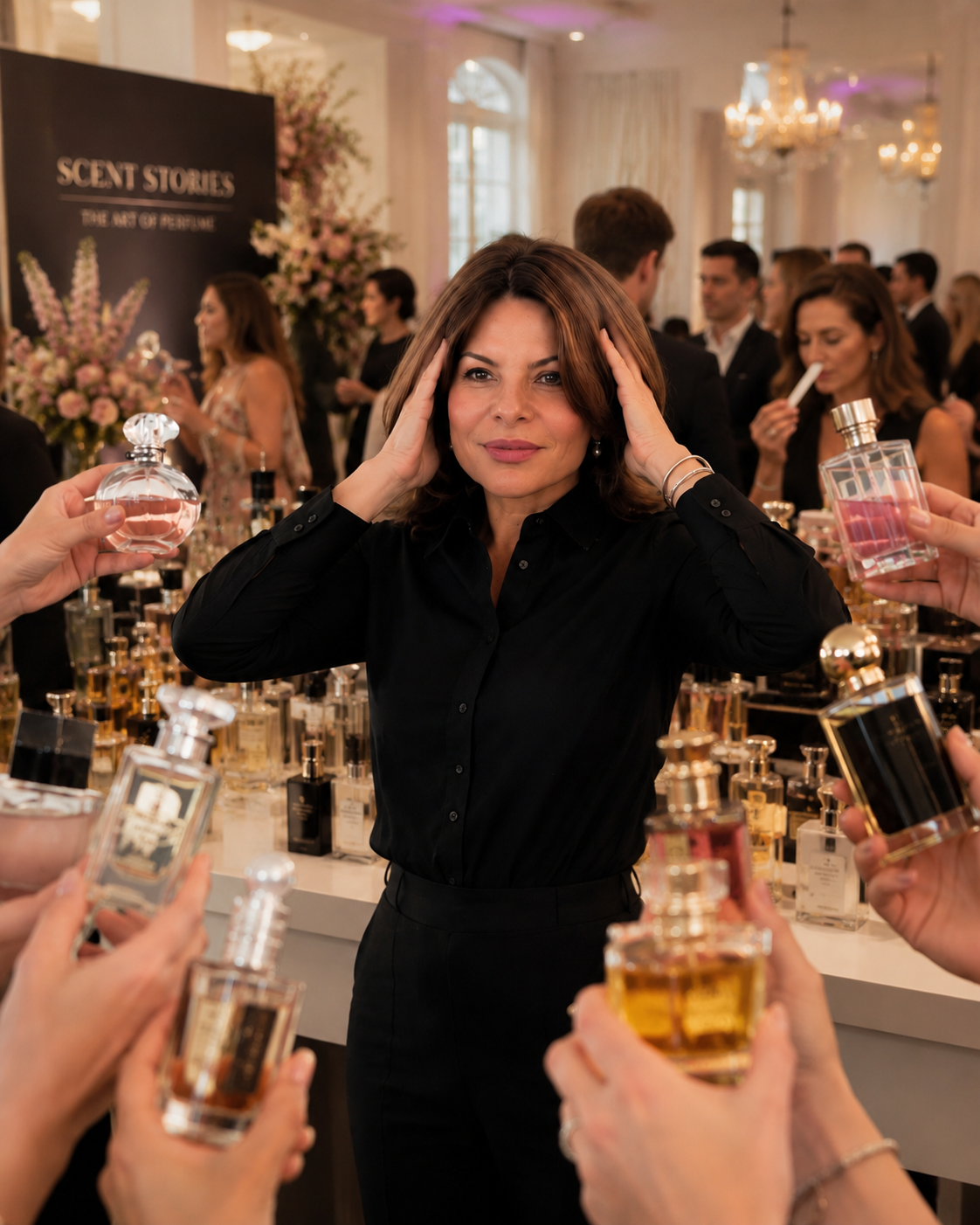
It is true that today, there is a strong trend toward very loud, highly projecting perfumes, fragrances that make a statement the moment you walk into a room.
We respect that, but it is not who we are. At Maison Violet, we focus on elegance and finesse. Our fragrances are highly concentrated and long-lasting, but we are not interested in overwhelming power for its own sake.
We strive for balance: a presence that is noticeable but not invasive. A trail that draws people in rather than pushing them away. In a world of noise, we try to offer a moment of subtle poetry.
Your branding, bottles, and packaging feel elevated and expensive. How did you fund the launch, and was it self-financed or supported through outside investment?
At the very beginning, we had very limited resources. A close friend believed in us and offered some initial support, and we each invested our personal savings as well. We were young, inexperienced, and eager to learn.
Looking back, we made many mistakes, but each one taught us something. I think that is part of the process. Many founders delay launching because they are chasing perfection, but sometimes, especially when funds are limited, you just have to start. You improve step by step, brick by brick.
That is what we have done, and continue to do, with Maison Violet.
Your perfumes are produced through IFF. Is owning more of the production process something you would like to grow into? Would having your own lab or in-house capabilities align with your long-term vision?
We actually work with DSM-Firmenich, not IFF. But yes, absolutely, it is part of our long-term vision.
Personally, I really miss being in the lab. As much as we love collaborating with Nathalie and being involved in the creative process, there is something deeply fulfilling about being close to raw materials, experimenting, and learning directly through trial and error.
Having our own lab would give us that space to explore again. We do not know when it will happen, but it is on the horizon.
Your fragrances reflect values beyond scent, supporting women’s rights and sustainability. How important is it for Maison Violet to stand for something larger than perfume?
It is very important to us. We are three dreamers, and we want to create more than just beautiful scents, we want to have a positive impact through what we do.
Of course, we are still a small company, and our capacity is limited. But as we grow, we aim to integrate more of our personal values into the brand. For instance, I am vegan, and it was important for me that our fragrances be vegan as well.
Whether it is sustainability, inclusivity, or artistic expression, we hope to build a brand that stands for something meaningful.
What kind of growth are you planning for? Do you want to keep things intentionally small and artisanal, or are you open to scaling internationally with the right partners?
There is still a lot of room for us to grow, and we are excited about that. We want to reach more people and have more impact.
But growth, for us, must always make sense. We are not chasing scale for its own sake. What matters is staying true to our values, maintaining a human approach, and continuing to enjoy what we do.
We want Maison Violet to be a brand that grows with purpose.
What do you hope Maison Violet represents in today’s crowded fragrance world?
That is a beautiful but difficult question.
I hope Maison Violet offers a moment of poetry, a pause in time. In a world where everything moves fast and many brands compete to shout the loudest, we want to whisper something meaningful.
We hope our fragrances feel intimate, elegant, and emotionally resonant. Something you do not just wear, but feel.

Maison Violet’s story is one of survival and reinvention. Its first life was shaped by nineteenth-century elegance and the ambitions of a family whose name was nearly lost to history. Its second life belongs to three friends who saw not just a brand to be revived, but a legacy to be honoured. In an industry where launches arrive weekly and attention is fleeting, they have chosen to move with purpose, building something meant to last.
Elevated Classics Classification: Maison Violet
- Primary Category: Revived Heritage
- Secondary Tags: Creative Director-Led, Perfumer-Collaborative, DSM-Firmenich Production, French-Owned, Independent
- Vertical Integration Status: Not vertically integrated. Creative direction remains in-house; formulation and production are managed through DSM-Firmenich.
- Key Collaborator: Nathalie Lorson (Master Perfumer)
- Savoir-Faire: Retro-modern reinterpretation of vintage perfumery, capturing the poetic soul and depth of the past while remaining wearable and relevant today. Emphasis on elegance, balance, and vegan formulations.
- Notable Creations: Tanagra, Compliment, Les Expressions collection (California Blossom, Rivage, Musc Angélique), Discovery Set
- Buying Considerations: Best suited for collectors and wearers who value refinement, heritage storytelling, and poetic craftsmanship over sheer projection power.









Leave a Reply