
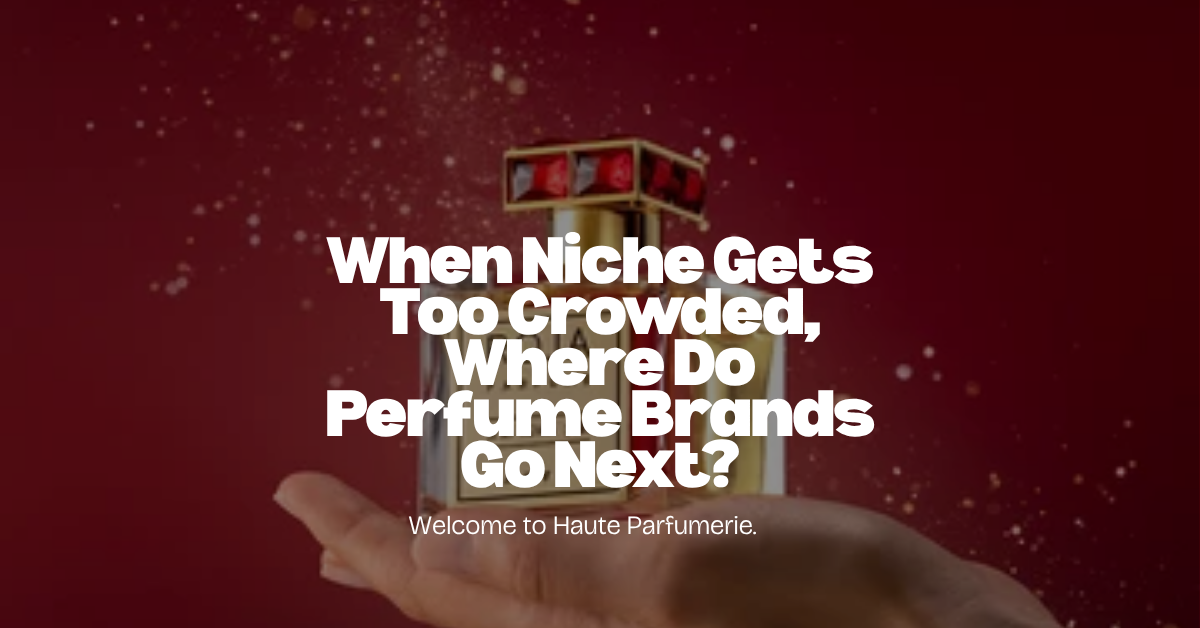
I started noticing the same move across several neo-niche brands: $350-plus for 50 ml, the same outsourced fragrance-house model, and suddenly the language shifts to “Haute Parfumerie.” That caught my attention. If the perfumers, production system and basic business model have not fundamentally changed, what exactly moved into a higher tier besides the price?
That sent me down a rabbit hole. What does haute actually mean in perfume, especially when we still cannot agree on what niche means anymore? As the category gets more crowded, I think niche is beginning to split in two directions. Some brands will chase scale through broader distribution, smaller sizes and greater accessibility. Others will move toward exclusivity, tighter distribution and much higher prices. My question is simple: when the positioning moves up, does the perfume move up with it?
The niche perfume market has a problem: it worked. What began as a relatively small alternative to mainstream fragrance has become a crowded commercial category of its own, with hundreds of brands competing for many of the same consumers, appearing in the same stores and relying on increasingly familiar ideas of rarity, creativity and craftsmanship.
Two Ways Out of a Crowded Market
When competition becomes this dense, businesses look for another lane. Harvard Business School’s work on strategic positioning describes the basic choice clearly: create enough distinctive value to command a premium price, or build an advantage around lower costs and broader competition.

I think niche perfumery is beginning to split along similar lines. One side will pursue scale through wider distribution, smaller bottles, accessible discovery sets and lower entry prices. The other will become more selective, with fewer stockists, more direct selling, tighter control over discounting and significantly higher prices. Both are legitimate business strategies. One depends on selling to more people; the other can succeed with fewer customers spending considerably more.
The New Appeal of “Haute”
This is where Haute Parfumerie becomes interesting. The term is not new, but its current prominence is. The Fragrance Foundation France noted this year that the expression has been appearing with renewed insistence as niche becomes more democratized and its codes more commonplace.

Brands are already making it central to their positioning. ORMAIE calls itself “Haute Parfumerie,” while Atelier Materi uses “Haute Parfumerie Française.” ORMAIE currently sells fragrances from roughly $350 into the $400 range; Atelier Materi describes itself as offering a new form of luxury centered on materials and craftsmanship.
There is nothing wrong with moving upmarket. My problem is much simpler: what changed in the perfume?
Fashion Has a Rulebook
Fashion provides a useful comparison because Haute Couture means something specific. Since 1945, Haute Couture has been a legally controlled designation in France. Houses are approved through an official process, and the designation is tied to practices including atelier work, unique models and made-to-measure production. A fashion company cannot simply raise its prices and decide that it is now Haute Couture.

Haute Parfumerie has no equivalent standard. There is no required formula budget, minimum quality of materials, development period, production ceiling or independent approval process. A perfume house can change its distribution, its pricing and its vocabulary without demonstrating that anything inside the bottle has materially changed.
What “Haute” Could Actually Mean
There are perfumes for which I understand the premium immediately. Danner & Flemming grows its own iris in Bavaria, has the material independently processed and works with independent perfumer Antoine Lie to build the fragrances around it. Production is tied to the harvest rather than an arbitrary “limited edition” number. The first collection exhausted its available iris after roughly 900 bottles. When that material is gone, that version of the perfume is gone.

The story is even more revealing because the founders originally hoped to supply their iris to the larger fragrance industry. The material was interesting, but the quantities were too small to fit easily into a system that depends on reliable supply and commercial scale. That is the kind of rarity I understand paying for. The limitation exists in the perfume itself, not merely in where the bottle is sold.
The Same Industrial System
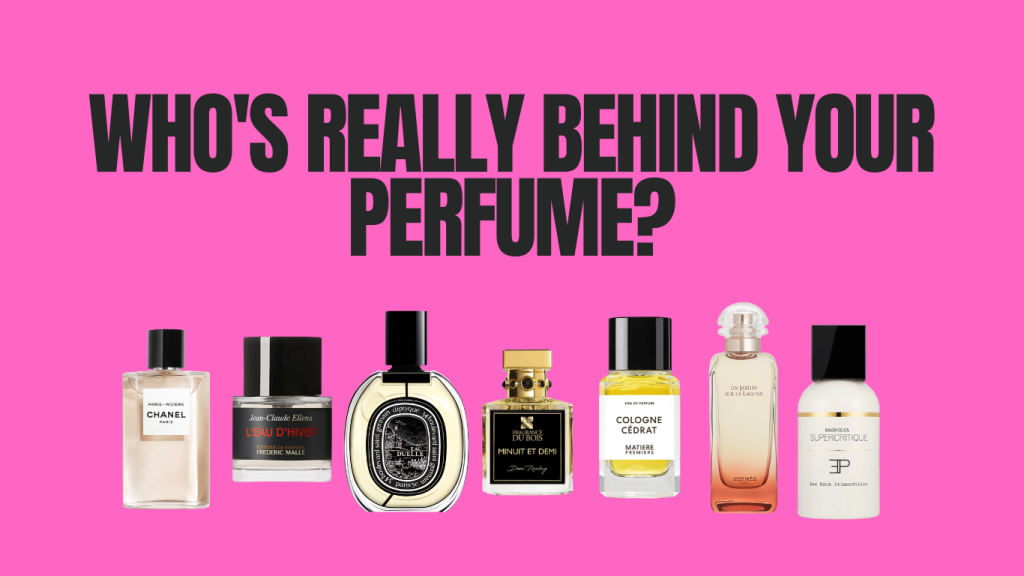
This is where I get irritated. Much of modern perfumery, from mass market to luxury, runs through the same large fragrance companies. So when a brand moves into “Haute Parfumerie” and the price jumps dramatically, I want more than a new vocabulary. If the perfumer, production system and manufacturing structure are essentially the same, show me what changed inside the bottle.

These companies operate at enormous industrial scale. They can source high quality natural materials and develop proprietary ingredients, but an industrial fragrance system also depends on consistency, repeatability and reliable supply. Truly scarce materials available only in tiny quantities are difficult to build into products intended for ongoing commercial production.
So if a perfume suddenly occupies a more expensive tier, I want to know what justified the move. Was the formula budget increased? Were better grades of materials specified? Was more development time allowed? Did the perfumer receive greater creative freedom? Those are meaningful differences. Limited distribution and a higher price are not.
My objection is not to expensive perfume. It is to sameness at a higher price, supported primarily by a more exclusive marketing position. If niche is dividing into mass and haute, the mass side is fairly clear about what it offers: greater access. The emerging haute side should be equally clear about what the additional money buys inside the bottle.
Otherwise, “Haute Parfumerie” risks following the same path as “niche”: a useful distinction that becomes increasingly difficult to define precisely when the industry discovers how valuable the word can be.





Leave a Reply