
The constant arrival of new fragrance brands had made me suspicious of almost every founder’s story. Then a woman in Hawai‘i sent me hers.
Whenever a new perfume brand introduces itself to me as “unique,” “niche” and “unlike anything else on the market,” I hold my breath a little. Oh God, here we go. Another collection, another discovery set, another founder explaining how they intend to change perfumery. I love perfume enough to spend an unreasonable amount of my life smelling it, researching it and talking about it. Lately, though, the activity around it has been wearing me out.
My frustration is with the industry. I can tell you what I enjoy wearing and what gives me a headache, but I am not a trained perfumer, and I cannot smell a composition and pretend to know every decision that went into making it. What I can examine is the business surrounding the bottle: who owns it, who created it, what we are being told about it and whether those claims deserve our attention.
Often, researching a new brand does very little to relieve my skepticism. I find inherited wealth, useful family connections or someone with the money and access to turn an interest into a luxury business. Sometimes I find an industry veteran who is tired of how the industry operates and has decided to change it by launching a brand that appears to operate much like all the others. Everyone has a vision. Everyone has a story. Remarkably often, the proposed revolution comes in a heavy bottle with a familiar sales pitch.
There are exceptions, of course. I know there are because I have met the founders, interviewed them and bought their perfumes. Houses such as Manos Gerakinis, Gallivant, 4160 Tuesdays, Thomas de Monaco, Spoturno and Les Indémodables have given me plenty of reasons to remain interested. Yet somehow, I had begun treating each new introduction as something its founder would have to defend.
Even the personal stories were starting to irritate me. A grandmother’s perfume. A childhood garden. A breakup. A reconciliation. A transformative journey. Sometimes there was even a promise to improve my self-confidence, now apparently measurable in percentages. I could feel myself becoming impatient before I had finished reading. I wanted to ask why a cherished memory needed to become another fragrance collection, and why I, as a customer, should care.
We already have Chanel, Hermès, Dior. We have the worlds built by Serge Lutens and Frédéric Malle. We have extraordinary perfumes made by people who have spent their lives learning this craft. What, exactly, was another founder proposing to contribute? Sometimes my private question was considerably less polite: what kind of ego makes you think you can do better?
Then Jinni Mitchell, a fine artist from Honolulu and the founder of Sunshine Shaka, wrote to me.
She was responding to one of my posts about perfume creation, and something about her warmth reached me immediately, even through an Instagram conversation. One evening, she told me, she had imagined creating a scent that expressed the islands where she had been raised and that she loved. She had no idea how to make it happen.

A friend introduced her to another woman from the islands who worked as a fragrance executive in New York. That connection led her to perfumer Jean-Claude Delville. According to her account, he needed a little coaxing initially, but once they began working together, the exchange became wholehearted. She sent songs, photographs, poetry and her favorite flowers. They spoke frequently on FaceTime.
Jinni held scent gatherings, carried her favorite versions with her and asked strangers what they thought. Eventually, she told me, there were two compositions she loved, including one that captured exactly what she had wanted from the beginning.
Reading her messages, I recognized the sort of founder’s story I had become so quick to dismiss. Here were the memories, the flowers, the longing to put a place into a bottle. But I was also being given a glimpse of the work: the conversations, the trials, the listening, the effort to communicate something deeply familiar to a person thousands of miles away.
She described walking at night through the garden of the property where she works as a caretaker, speaking aloud to the stars and hoping Jean-Claude would feel what this project meant to her. She thought of SHAKA as the stone in a David-and-Goliath story. When she asked whether his name could appear on her box, she told me he agreed on the condition that it be described as a collaboration between them. She wanted to credit the perfumer. In her telling, he wanted to acknowledge what she had brought to their work together.

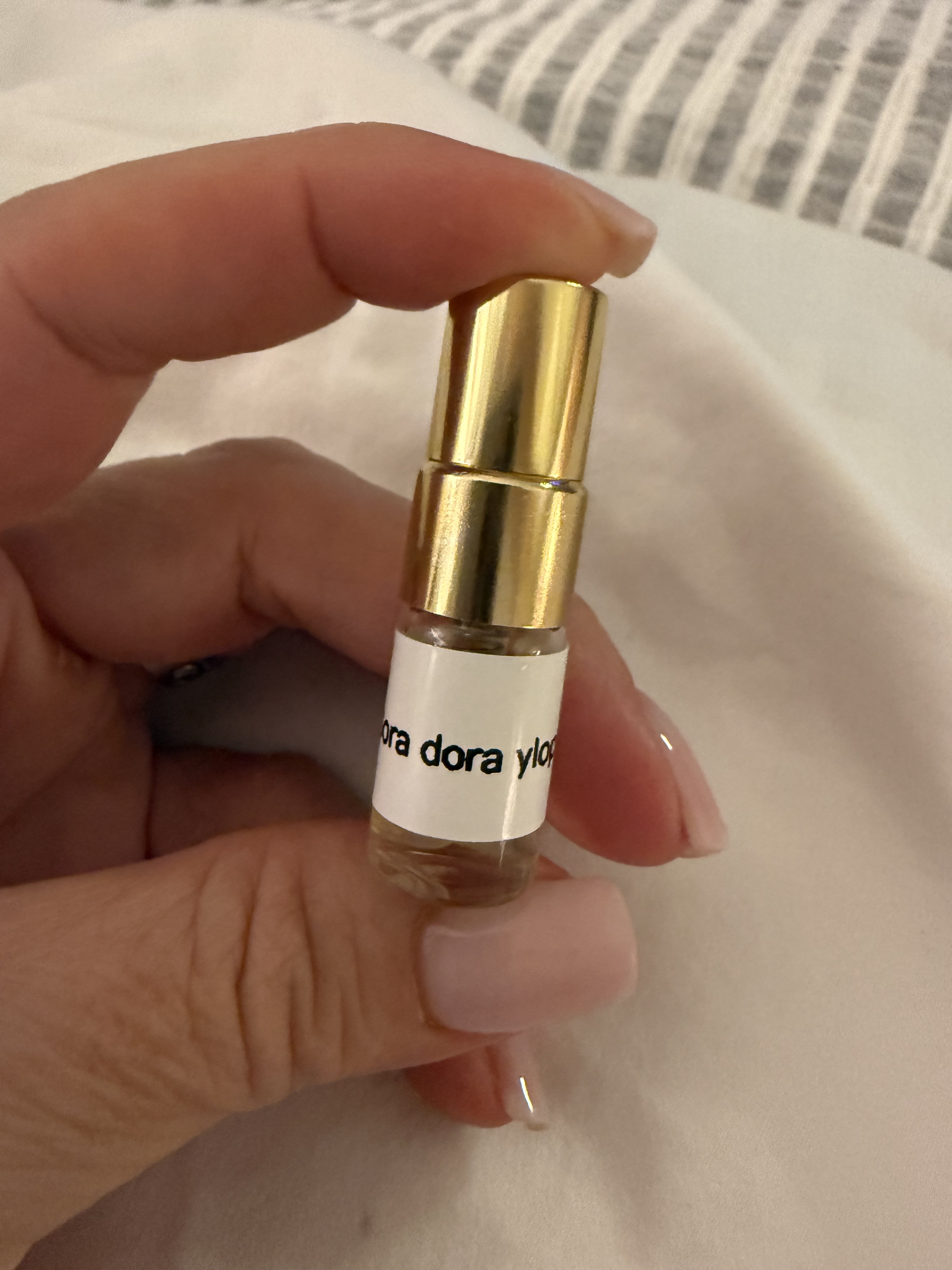
Then her samples arrived, carefully filled and tucked into the sweetest little pouch. I noticed the care before I smelled anything, but I still had to smell them. A kind person can make a perfume I do not enjoy. An affecting story cannot make me want to wear something.
I loved them.
The two perfumes are Kaimana and Lei Stand No. 14. Kaimana is the brighter, fresher composition, with sunny citrus and an ocean-breeze character, while Lei Stand No. 14 explores lush, sensual white florals and the warmth of a fading Hawaiian sun. You know my weakness for florals and classic French perfumery, so you can imagine why this collection appealed to me. Both were beautiful to my nose, and I wanted to wear them again.

I sample at least one discovery set a day and rarely buy a bottle, even when I like what I smell. I already own so many perfumes I love. But these were perfumes I wanted to own, and that made my question about whether we needed another one rather difficult to defend. Here I was, making room for hers.
Somewhere along the way, I had begun expecting every new perfume to justify its existence against the finest ever made. Why should she have to improve upon Chanel No. 5? Surely loving her home enough to want to express it, finding a perfumer who understood her and making something beautiful together was a reason to begin. I had become so accustomed to questioning the sales pitch that I was struggling to hear the person.
I remain frustrated with much of this industry, and I will keep writing about it. But I owe the people entering it the curiosity I bring to their perfumes. A crowded market tells me very little about what making a fragrance might mean to someone, or what wearing it might come to mean to me.
Jinni wanted to capture the islands she loved. With Jean-Claude, she made perfumes that reached a woman thousands of miles away who thought she had smelled enough. I would hate to have become so certain of my criticism that I missed the pleasure of being wrong.
Kaimana and Lei Stand No. 14 will be available soon. Follow @sunshine.shaka for news of their release.







Leave a Reply