
A handful of exchanged samples led me to one of the strangest survival stories in French perfumery
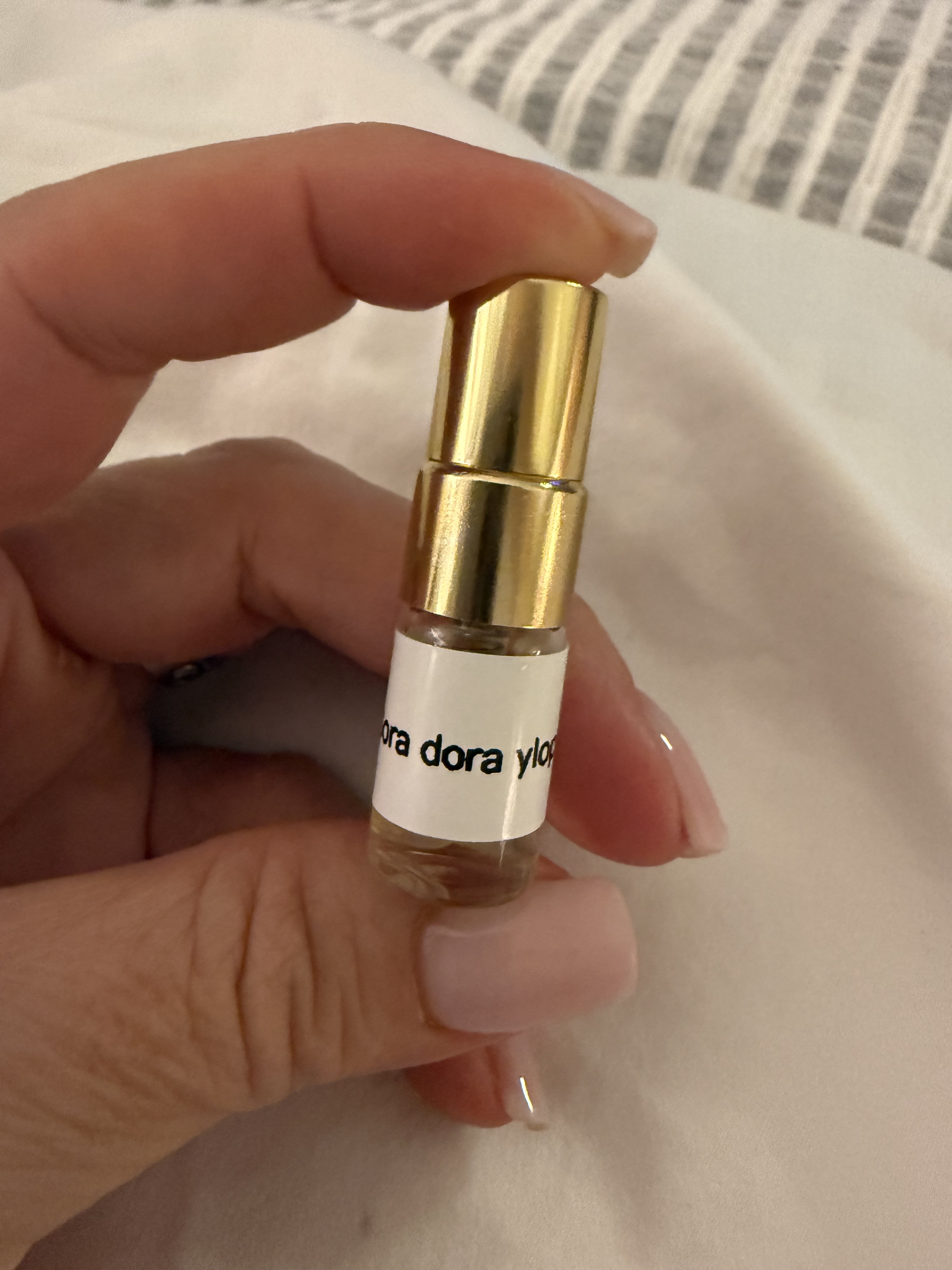
A few weeks ago, an Instagram follower who had become a friend handed me a small box of perfume samples. No publicist, no launch event, no carefully staged introduction to a brand, just a handful of vials exchanged between two people who love perfume. There is a whole private circulation of fragrance that exists alongside the commercial one: bottles are split, decants change hands, discontinued perfumes resurface, and houses that have slipped out of the usual conversation are sometimes discovered this way, through another collector saying, simply, you need to smell this.

Among the samples she gave me were five perfumes from L.T. Piver: Héliotrope Blanc, Eau des Princes, À la Reine des Fleurs, Rêve d’Or and Pompéia. I knew the name in the vague way one recognizes something from old perfume books or vintage advertisements, but I had never seriously explored the house. Then I sprayed all five and found myself liking every one of them. What surprised me even more was how long they lasted. Hours later, they were still clearly present on my skin, not as the faint remains of antique-style colognes, but as substantial perfumes with texture, presence and remarkable persistence.
That curiosity sent me looking for the company behind them, and the story turned out to be more complicated than a simple heritage revival. L.T. Piver was founded more than 250 years ago, grew into one of France’s major perfume manufacturers, took part in the early development of modern perfumery, changed hands, closed its famous Aubervilliers factory and gradually disappeared from the prestige conversation. Yet the business itself never vanished. It continued selling perfume around the world, often in markets where the name had never been forgotten, and in 2022 entered a new chapter under Nelly Chenelat. What looked at first like the resurrection of a historic house was really something more unusual: the return to view of a company that had been there all along.
The House Before the Initials
The story usually begins with the tidy phrase “L.T. Piver, founded in 1774,” but the company’s origins are more layered than that suggests. In 1774, during the reign of Louis XVI, master perfumer Michel Adam opened a shop on the rue des Lombards in Paris called À la Reine des Fleurs. Archival research by the Société d’Histoire d’Aubervilliers records that Adam became a supplier to the royal court; the house itself also links the fragrance to Marie Antoinette, though that claim is better treated as part of its historical tradition than as firmly documented fact. Adam’s son took over in 1799, followed in 1805 by a cousin, Pierre-Guillaume Dissey. Four years later, Dissey hired a young apprentice named Louis-Toussaint Piver, whom the archival record describes as particularly interested in chemistry. By 1813 they were partners, trading as Dissey et Piver. When Dissey died in 1823, Piver took control of the business, and the name that still appears on the bottles today finally entered the story.

The business that became L.T. Piver had already lived several lives before Louis-Toussaint took control. It passed through different owners and names, survived the French Revolution, Napoleon, the Bourbon Restoration and another revolution, all while perfume itself was moving from courtly luxury toward a broader commercial industry. By the time Piver died in 1877, the small shop Michel Adam had opened a century earlier had been transformed into a very different kind of enterprise.

The scale of that transformation is still visible in photographs of Piver’s Aubervilliers factory, where much of the company’s production moved between 1865 and 1868. The images are a long way from the polished mythology that often surrounds old perfume houses: smokestacks, brick industrial buildings, boilers, distillation equipment, loading areas and rows of workers. By the end of the 19th century, nearly 1,000 people worked there, most of them women. Their days could stretch from seven in the morning until seven at night, and workers filling bottles were expected to complete roughly 240 flacons a day. Archival accounts also describe the physical toll of the work, from alcohol vapors to clouds of rice powder that could bring headaches and illness. Behind the bottles, labels and elaborate advertising was a large industrial operation built on exacting, repetitive labor.

By 1926, the Aubervilliers operation employed about 1,500 people and was producing roughly 50 tons of goods a day. Piver had branches and commercial representation across Europe and as far away as New York, Mexico, Buenos Aires and Hong Kong; by the beginning of the 20th century, more than half of its turnover was already coming from outside France. The company’s output extended well beyond perfume to soaps, powders, creams and toiletries, along with products that now sound almost improbable, including perfumed toothpicks and scented preparations for the hair and complexion. Piver had become less a perfume house in the narrow sense than a vast international beauty business.
When Chemistry Entered the Perfumer’s Palette
By the late 19th century, Piver was operating at the point where traditional perfumery was colliding with modern chemistry. Until then, the perfumer’s palette had been limited by what flowers, woods, resins, spices and animal materials could physically yield. The arrival of synthetic aroma molecules changed that vocabulary. Suddenly, perfumers could build effects that nature could not supply in usable form, intensify familiar materials, and construct entirely new accords.

Piver was working in the same experimental climate as Houbigant and Guerlain. Houbigant’s Fougère Royale had introduced coumarin into a major fine fragrance, while Guerlain’s Jicky demonstrated how synthetics could be woven into a classical natural structure. At Piver, chemist Georges Darzens was developing new aromatic materials, including isoamyl salicylate, which became central to Trèfle Incarnat in 1898. The perfume belongs to the early generation of compositions in which chemistry was no longer hidden behind nature, but actively shaping what perfume could become.

Against that history, Héliotrope Blanc becomes more than a pretty powdery perfume. Piver dates it to 1885 and describes it as one of the early fragrances to use heliotropin, the material that helped establish the almondy, vanilla-like, powder-soft effect we now associate with heliotrope in perfumery. The current eau de parfum builds around heliotrope, ylang-ylang and tonka bean. What interested me on first sampling was how little it behaved like a fragile historical reconstruction. There is softness, body and an almost tactile powderiness, and it remained distinctly present long after I expected it to recede.

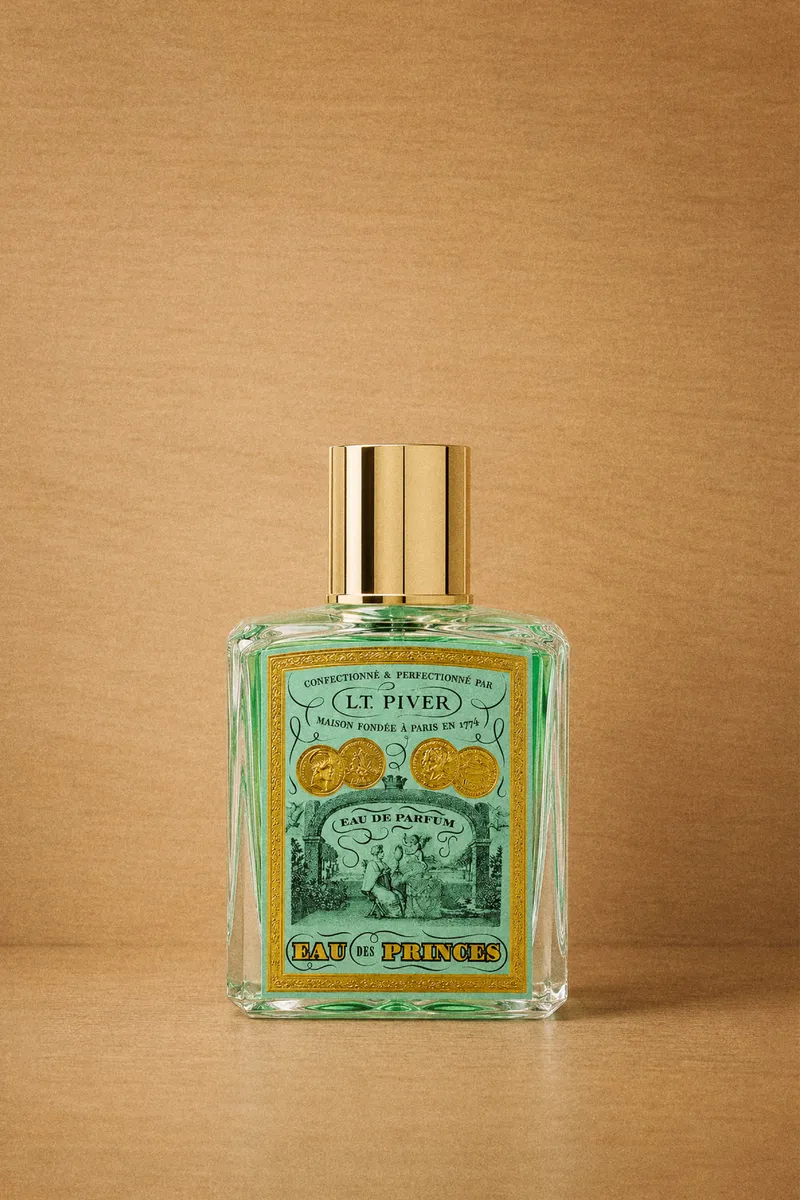
The other four samples show very different sides of Piver. Eau des Princes, now structured around mint, sage and ambrox, carries the aromatic freshness of the house’s cologne tradition. À la Reine des Fleurs, with verbena, petitgrain and musk in the current formula, takes its name directly from Michel Adam’s original shop. Rêve d’Or brings raspberry and saffron against cedar, while Pompéia, one of the perfumes that remained commercially important long after Piver had faded from fashionable European counters, is built today around peach, ylang-ylang and moss. They smell quite different from one another, but wearing them together gave me a clearer sense of the house. There is substance to all five, and none behaves like a delicate historical curiosity. They unfold slowly on skin and, most surprisingly, they last.
The Part of the Story That Almost Gets Erased
The Aubervilliers factory finally closed in October 1973 after decades of contraction following the Second World War. At that point only about 120 employees remained. If the story ended there, L.T. Piver could easily be filed alongside the many French perfume names that disappeared as the industry consolidated. But the company did not cease to exist. It reorganized, continued producing and continued selling. The local historical society was already writing in 2020 that Piver had taken a new direction beginning around 1988 and remained one of the relatively unusual perfume businesses still producing some of its own fragrances.
In 1989 the Franco-Algerian Amouyal family acquired L.T. Piver from Rhône-Poulenc and ran it for more than three decades. Here the geography of perfume memory becomes fascinating. While collectors in Paris, London and New York increasingly associated prestige French perfume with other names, Piver maintained a substantial business abroad. When the company changed hands again in 2022, it was reportedly generating roughly €5 million in annual revenue, 90 percent of it from exports, and selling more than two million units worldwide, with markets that included the Caribbean, the United States, the Middle East and Cambodia.

Piver had not disappeared so much as slipped out of view in the markets that shape much of today’s luxury perfume conversation. While its name became less familiar on European prestige counters, the perfumes continued to sell elsewhere, particularly in the Caribbean, the Middle East, the United States and Cambodia. For those customers, Pompéia and Rêve d’Or were not rediscoveries at all. They were perfumes that had simply remained in circulation.
Nelly Chenelat and the Problem of Restoration
In 2022, Nelly Chenelat, after some three decades in fragrance and luxury at companies including Cartier, Mugler and Yves Saint Laurent, acquired L.T. Piver from the Amouyal family. The transaction was backed by a group of investors led by CAP Invest, which remains a minority shareholder. Chenelat was not buying an abandoned trademark to attach to a new collection. She was taking over an operating perfume company with its own formulas, production capabilities, existing customers and more than two centuries of accumulated history.

That history could easily have become a burden. There is a familiar formula for reviving an old perfume name: open the archive, reproduce the typography, photograph a few yellowed advertisements and sell nostalgia in a heavy bottle. Chenelat took a more difficult route. She brought in perfumer Joëlle Lerioux and began rebuilding the prestige side of Piver without severing it from the business that had kept the house alive. Lerioux has described her work as “paraphrasing” the Piver signature rather than attempting to reproduce historical formulas word for word. It is an unusually accurate way to describe the problem. Raw materials disappear, regulations change, suppliers vanish and a formula written for 1907 cannot simply be returned to production unchanged more than a century later.

I keep thinking of the process less as a relaunch than as the restoration of an old building that has never actually been abandoned. You cannot preserve it by pretending electricity, modern plumbing and fire codes do not exist, but replace too much and eventually you are standing inside a replica. The same tension runs through these perfumes. The current collection revisits seven historic Piver names, but they are not presented as untouched formulas pulled intact from a vault. They have been reconstructed for the materials, regulations and noses of the present day. At the same time, Piver still owns its formulas and retains unusual control over its production, while the house continues to emphasize French manufacture, maturation and maceration as part of the way the perfumes are made.

I found my way into this history almost accidentally. An Instagram friend handed me five small samples: Héliotrope Blanc, Eau des Princes, À la Reine des Fleurs, Rêve d’Or and Pompéia. That simple exchange now feels strangely appropriate. L.T. Piver survived for decades in much the same way, not because the luxury world was constantly reminding us that it existed, but because people continued to buy the perfumes, wear them and pass the name along. While one part of the perfume world forgot Piver, another never did.
After wearing the five, I find myself less interested in whether L.T. Piver can reclaim some abstract position in the hierarchy of French luxury than in whether the perfumes themselves deserve our attention now. For me, they do. History can make a perfume fascinating before you smell it, but history cannot make you want to wear it. These did. I liked every one I tried, was surprised by their presence and longevity, and kept returning to my wrist long after the first spray.
Elevated Classics Classification
Primary Category: Heritage
Secondary Tags: Privately Held, Continuously Operating, Historically Significant, House Perfumer, Formula Ownership, French Production, Archive-Led Reinterpretation






Leave a Reply