
When I was in college, I worked for Clinique in Los Angeles. Our counter sat directly across from Estée Lauder, our parent company, so two perfumes were simply part of the atmosphere of my working day: Clinique Aromatics Elixir on our side and Estée Lauder Youth-Dew across the aisle. I was in my early twenties, and my taste in perfume had not yet developed much tolerance for anything difficult. I thought both of them smelled awful.
The women who came to buy them are much clearer in my memory. Many were older, affluent, beautifully dressed and very sure of themselves. This was Los Angeles in the 1990s, and there was a particular kind of woman who wore these perfumes. Often you smelled her before you saw her approaching the counter. Aromatics Elixir left that unmistakable trail of patchouli, herbs, moss and flowers; Youth-Dew brought spices, balsams, amber and a sweetness that seemed almost impossibly dense to me then. Neither made any attempt to disappear politely into the skin.
My taste has changed considerably since those days, although perhaps not in the way you might expect. I still do not want to wear either of them. I can appreciate Youth-Dew for an hour on a blotter and have absolutely no desire to smell like it myself. The same is true of Aromatics Elixir. But I love smelling them now. Once my perfume vocabulary expanded, I began to understand the difference between disliking a perfume personally and recognizing that it is extraordinarily well made. These are perfumes with architecture, nerve and an unmistakable identity. I may not want them on my body, but I would hate to live in a perfume world in which nobody had dared to make them.
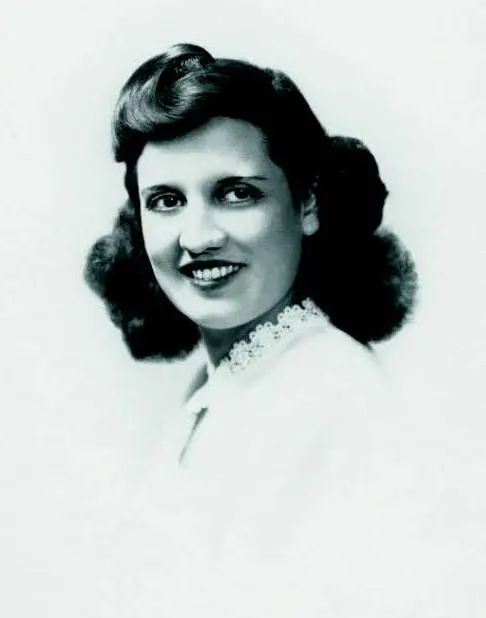
That is partly how I found my way back to Youth-Dew, and eventually to Josephine Catapano, the woman now widely credited with creating it.
A Brooklyn Chemist Finds Perfumery
Catapano was born in Brooklyn in 1918 and studied chemistry at Hunter College. During the Second World War she worked in a hospital laboratory, but the work did not suit her. IFF’s account of her career says, rather charmingly, that although she liked chemistry, she did not like working with blood. She eventually found another place for that scientific training in the fragrance industry, joining Van Ameringen-Haebler in New York during the 1940s.
There she worked under Ernest Shiftan, the German-born chemist and perfumer who had become one of the central figures in the developing American fragrance industry. Catapano began as his assistant and became a perfumer herself. It is difficult not to admire the simple fact of that progression when you consider the period. She was a young American woman entering professional perfumery at a time when the field was overwhelmingly male and when France still carried most of the cultural authority in fine fragrance. The consumer was not expected to know the name of the person who had written a formula, and there was certainly no industry built around turning perfumers into public personalities.

Catapano nevertheless became an important figure within the profession. She joined the American Society of Perfumers in 1952 and by 1961 was serving as one of its directors. Van Ameringen-Haebler, meanwhile, merged with Polak & Schwarz in 1958 to become International Flavors & Fragrances. Catapano remained with the company, working through a period in which New York was becoming increasingly important as a center of perfume creation.
What fascinates me about her career is that it coincides with the moment American perfumery seems to become more confident in itself. The great French houses still mattered enormously, but companies such as Estée Lauder were building a different kind of prestige fragrance business in the United States, one tied closely to department stores, cosmetics counters and American women buying beauty for themselves. The perfumes could be polished and luxurious without pretending to be French.
Youth-Dew arrived right in the middle of that change.
Youth-Dew, Zen and Fidji
The commercial story of Youth-Dew is famous. Estée Lauder introduced it in 1953 as a bath oil rather than beginning with a traditional perfume. At the time, fragrance was still frequently treated as a gift a woman received from a man. A bath product was much easier to justify buying for yourself, and women quickly discovered that the heavily scented oil worked perfectly well dabbed directly onto the skin. It was clever marketing, but clever marketing alone does not explain why the fragrance endured.

The smell was enormous. Youth-Dew was spicy, balsamic, warm, floral, woody and sensual. There is almost nothing tentative about it. Even today, after reformulation and seventy years of changing taste, it can be difficult to imagine a major beauty company launching something that bold as one of its signature fragrances.
More than a decade later, Catapano created the original Zen for Shiseido in 1964. It is worth specifying “original” because Shiseido has reused the name and the Zen sold today is a completely different perfume. Catapano’s version was green, woody and floral, very much of its period but also evidence of how international perfume creation had already become. A Brooklyn-born chemist working in New York for an American fragrance supplier was composing a fragrance for one of Japan’s most important beauty companies.

Then came Guy Laroche Fidji in 1966, which may tell us more about Catapano as a perfumer than any list of her accomplishments. Research by Michael Edwards records that the brief was connected to L’Air du Temps, with the idea of creating something modern from that kind of floral starting point. Catapano made the fragrance greener and airier, using materials including cis-3-hexenyl salicylate and Lyral, both useful in creating the fresh, leafy and floral effects she wanted.

Her reasoning has stayed with me since I first read it. Catapano believed green notes made sense around flowers because flowers in nature come with leaves and stems. It sounds obvious once someone says it, but there is a beautiful practicality to the thought. She was a chemist using relatively modern aroma materials not to make flowers feel artificial, but to give a perfume more of the world that naturally surrounds them.

Norell, released in 1968 for American designer Norman Norell, was another distinctly green perfume, but much darker and more substantial than Fidji. Galbanum, narcissus and hyacinth give the opening a bitter, almost bracing quality before it moves into a large floral heart of carnation, rose, iris, gardenia, mimosa, jasmine and ylang-ylang. Underneath is the kind of base that has largely disappeared from modern mainstream perfumery: oakmoss, vetiver, myrrh, woods, musk and amber. It is floral, but there is nothing delicate about it. The greenery is sharp, the moss is unmistakable and the whole thing has the slightly stern elegance I associate with some of the great American perfumes of that period. Looking at Youth-Dew, Fidji and Norell together, you begin to understand how broad Catapano’s range really was.
Her Legacy
Catapano went on to receive the Cosmetic Career Women’s Award in 1980 and the American Society of Perfumers’ Lifetime Achievement Award in 1993. She died in 2012 at the age of 93, having watched the New York fragrance industry she entered in the 1940s grow into a global business.

I wish I had known her name when I was standing behind that Clinique counter all those years ago. I would still have disliked Youth-Dew. I probably would have made the same face when one of its devoted customers walked past me in a cloud of it. At twenty-something, I simply did not yet have the experience to understand what I was smelling.
Now I understand what made it extraordinary. Youth-Dew was dense, difficult and remarkable, yet it was made for a mass audience. The women I remember buying fragrances like Youth-Dew and Aromatics Elixir did not seem particularly interested in disappearing either. Their perfumes announced them before they reached the counter.
I know her name now, and I think she deserves to be remembered.








Leave a Reply