
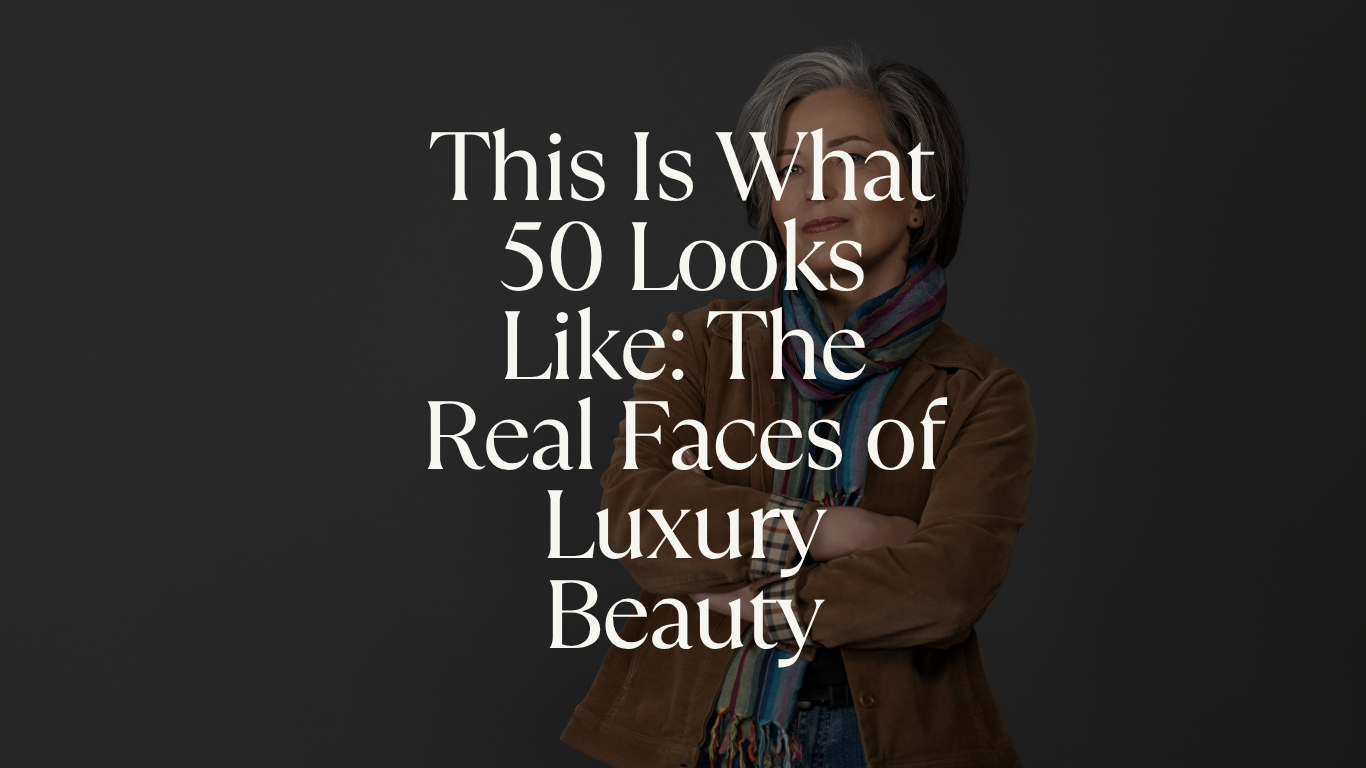
A few weeks ago, I got caught in a TikTok loop. The trend was “This Is What 50 Looks Like,” and it had me pausing mid-scroll. Women, each in their own way, standing confidently in front of the camera: no filter, no apology. Some looked like silver-haired models. Others had tattoos, eye crinkles, or lip gloss that would make a teenager jealous. Some looked 35. Others looked exactly 50, and some much older. And all of them were right.
That’s when it hit me, people really have no idea what 50 looks like anymore. And that confusion is being reflected right back to us by the beauty industry.
I’m 52. I wear perfume all the time. I buy full-size bottles of Guerlain and Ormonde Jayne, not because I want to show off, but because I love them. I have no problem spending on skincare that actually works. I’m not “aging gracefully”, I’m just living. And I am not alone.
The Silent Majority of Beauty
There’s a strange irony happening in beauty. Brands are scrambling to go viral on TikTok, chasing Gen Z with every product drop and every AI-designed campaign. Yet women over 45 make up the most consistent, highest-spending segment in luxury beauty. We are the ones buying the $300 serums, the niche perfumes, the refillable lipsticks that actually get refilled. But you’d barely know we exist if you went by Instagram ads or product packaging.

Gen X and Boomers collectively account for hundreds of billions in beauty spending. A recent Forbes piece puts Gen X’s annual beauty spend at $279 billion, expected to rise to $430 billion in the next decade. NielsenIQ projects that consumers over 45 will generate nearly half the growth in beauty value globally in the next ten years.
It’s not that younger women aren’t important. It’s just that we’re rarely spoken to, despite our influence. We’ve become the invisible backbone of the beauty market.
More Than a Demographic
At 50, you don’t just know what you like, you know what you’ll never buy again. You stop chasing trends and start investing in quality. You understand the difference between a good perfume and a great one. You care more about a clean formula that performs than a buzzy label. You can spot fake luxury from a mile away.

There’s a level of discernment that comes with age. I’m not looking for a product to make me look younger. I’m looking for something that understands who I am now, how I live, how I spend, how I see myself. A product that respects the decades it took to build this taste.
The Gap in the Mirror
What the “This Is What 50 Looks Like” trend really exposes is the sheer variety of us. There’s no one version of 50. Some women are caretakers. Some are business owners. Some are just beginning again after divorce or burnout or joy. Some look younger than they feel. Some feel younger than they look. All of us deserve to be seen.

Many brands still pursue virality over value. “Anti-aging” remains the dominant narrative (77 percent of U.S. women use such products), yet the demand for authenticity, use of real age-appropriate models and scientific backing, is stronger than ever. But in the beauty world, it’s still mostly youth that’s front and center. Not experience. Not longevity. Not power.
What Needs to Change
Representation isn’t about checking a box. It’s about reflection. The women I know want to see themselves in campaigns, elegant, strong, sensual, wise. We want perfume ads that don’t feel like they’re made for a 23-year-old’s idea of glamour. We want beauty consultants who take our time seriously. We want fragrance houses that treat our loyalty with the respect it deserves.
Feature real women in ads: Every model over 45 isn’t token, they’re part of the story.
Rethink product innovation: No more “anti-aging”, focus on hydration, comfort, textures that don’t settle into fine lines, smart packaging that’s both elegant and functional.
Commit to omnichannel: Luxe brick-and-mortar alongside seamless online experiences, with loyalty and connection at the core.
Support authentic voices: Partner with mature beauty influencers who bring credibility, insight, and audience trust.
And yes, we want to be inspired. But we also want truth. Because at this age, we’ve seen enough to know when it’s missing.
This Is What 50 Looks Like
Fifty looks like full perfume shelves and a bathroom cabinet curated like a boutique. Fifty looks like women who built their careers and their families and still find time to fall in love with a new lipstick. Fifty looks like someone who doesn’t need approval but still enjoys a compliment.
We’re not aging out of beauty. We’re just getting better at it.
So if the industry is really listening, here’s the message: don’t market to us. Make products worthy of us. And then watch how loyal we can be.





Leave a Reply