
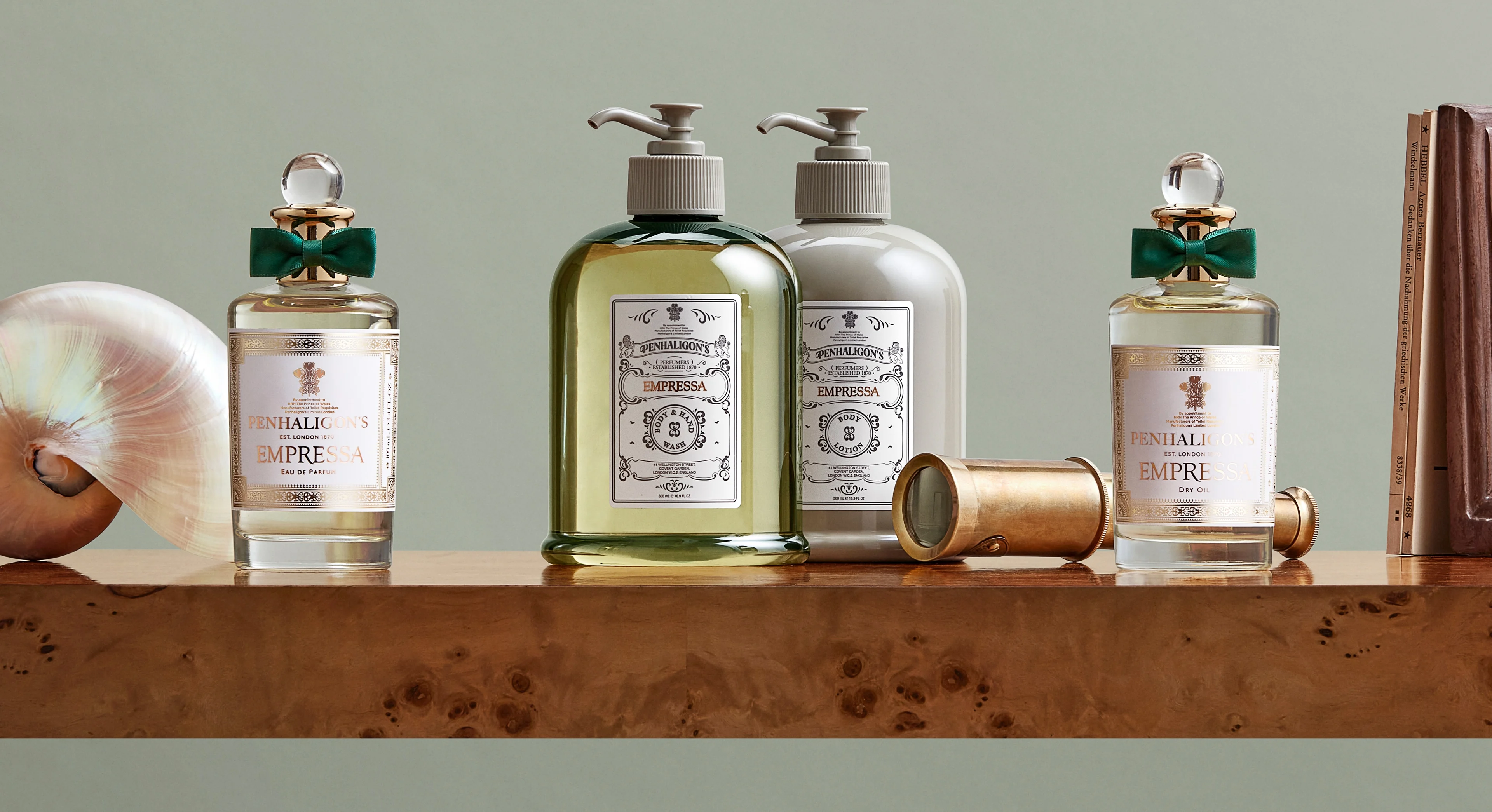
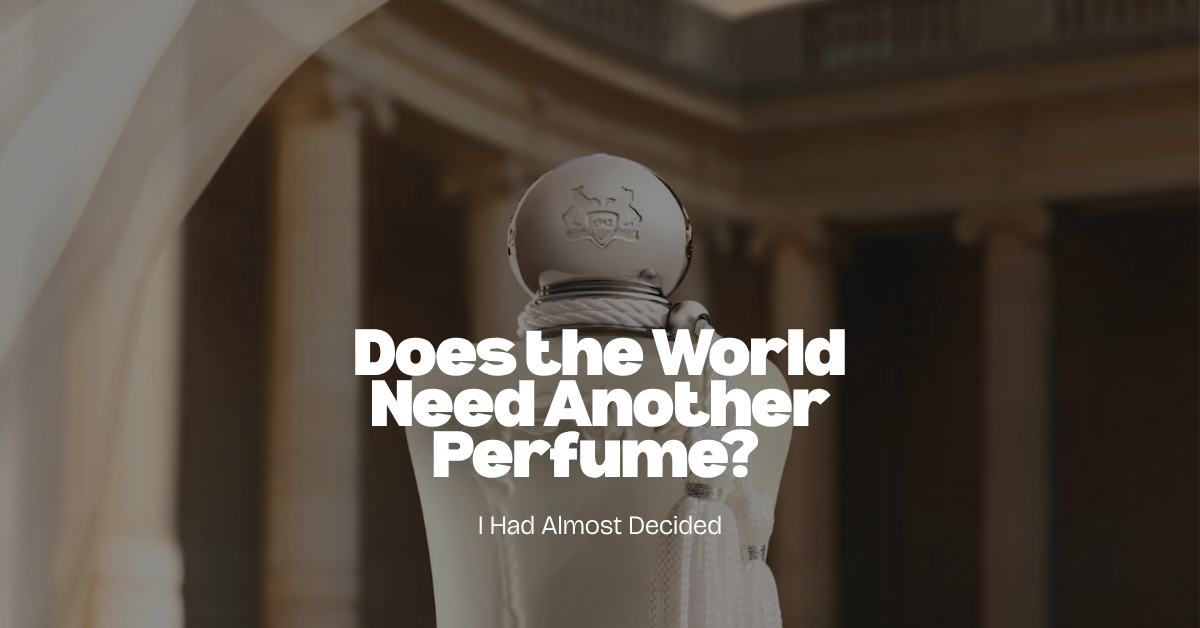
I was going through my perfume collection recently, trying to identify all the British houses I own, when I realized I had somehow left one perfume off my spreadsheet entirely: Penhaligon’s Empressa. It was a slightly ridiculous omission considering that Penhaligon’s is not merely British, but one of the great surviving names of British perfumery, with a history stretching back more than 150 years.
What makes Empressa particularly interesting is how contemporary it feels. It is bright, fruity, feminine and extremely polished, with the plush modernity we have come to associate with contemporary luxury perfumery.
From Jermyn Street to a British Perfume Institution
The Penhaligon’s story begins with William Penhaligon, a Cornish barber who arrived in London in the late 1860s and found himself working beside the Turkish baths on Jermyn Street. The heat, steam and aromatic materials used in the baths eventually inspired Hammam Bouquet, created in 1872 and still considered one of the house’s defining early fragrances.

Over time, Penhaligon’s became associated with British society, tradition and the Royal Household, growing from a barber’s business into one of the country’s most recognizable perfume houses. The Penhaligon’s we know today, however, is part of a much larger luxury group. In 2015, the Spanish beauty company Puig acquired Penhaligon’s along with L’Artisan Parfumeur, bringing both historic houses into its international fragrance portfolio.
Empressa and the Trade Routes Collection
Empressa first appeared in 2014 as part of Penhaligon’s Trade Routes Collection, a line inspired by London’s historic role as a trading center and the spices, woods, fabrics, resins and other precious goods that passed through its docks.

Within that story, Empressa occupies its most overtly feminine space. Penhaligon’s evokes pearls, fine fabrics and precious silks brought to London to adorn women of wealth and influence, and the imagery suits the perfume beautifully. It suggests luxury that is tactile and ornamental, expressed through texture, color and adornment rather than through grandeur alone.
That romance of British trade, however, comes with a more complicated history. London’s access to precious materials and luxury goods was deeply tied to the reach of the British Empire, and British perfumery, like British fashion and interiors, was shaped by materials and influences arriving from far beyond Britain. With its citrus, fruit, spices, florals, woods and resins, Empressa feels almost like a miniature expression of that history.
The Scent
The opening is bright and juicy, with citrus giving Empressa lift before the fruit begins to soften around it. Peach is especially important because it gives the fragrance a plushness that keeps the citrus from becoming sharp or conventionally fresh. The darker berries add depth without turning the perfume into a sugary fruit cocktail, while rose and neroli seem to weave through the composition rather than stepping forward as obvious floral statements.

What keeps all of that fruit from becoming overly sweet is the patchouli. It gives Empressa structure and anchors the peach, berries and florals in something darker and more substantial. As the fragrance develops, musk, sandalwood and vanilla smooth the edges and the sweetness becomes warmer and more enveloping. Maltol and cacao are present in the base, but I would not call Empressa gourmand. Its sweetness feels dressed rather than edible.
That is probably the best way I can describe its character. Empressa is feminine in a very composed way. It is not eccentric or difficult, nor does it appear interested in proving how unconventional it can be. Instead, it smells beautifully groomed, confident and expensive.
The Coco Mademoiselle Question
It is almost impossible to read about Empressa without encountering comparisons to Chanel Coco Mademoiselle, and I understand why. Both fragrances use the broad architecture that has become enormously successful in modern feminine perfumery: sparkling citrus at the top, fruit and florals through the center, and patchouli, woods, vanilla and musk underneath.
The resemblance exists, and there is no reason to pretend otherwise. What interests me more is what Empressa does within that familiar structure. It pushes the fruitier and softer side of the idea, allowing peach and berries to give the perfume a plush, rounded quality while the patchouli provides enough depth to keep it sophisticated. Coco Mademoiselle has its own unmistakable Chanel identity and a sharper sense of contrast. Empressa feels softer around the edges and more overtly luxurious in texture.

Perfume lovers sometimes become uncomfortable when a niche fragrance reminds them of a successful designer perfume, as though familiarity automatically makes the more expensive fragrance less interesting. I do not think perfume works that way. Most perfumery belongs to recognizable families and traditions, and originality often lies in proportion, texture and execution rather than in inventing an entirely new structure.
I would not recommend Empressa to someone searching for something radical. I would recommend it to someone who already loves this kind of citrus-fruit-patchouli construction and wants it rendered with a softer, plusher and distinctly Penhaligon’s sense of luxury.
Worth Its Luxury Price?
At $330 for 100 ml, Empressa is an expensive perfume, and I would not recommend buying it on the basis of value alone. Its appeal is too personal for that.
This is the kind of fragrance you need to smell on your own skin and decide whether its polished, plush character speaks to you enough to justify the price. For some people it will. For others, it will simply be a beautiful perfume they are happy to admire without owning.
The Elevated Classics Classification
House: Penhaligon’s
Founded: 1870, London
Founder: William Penhaligon
Ownership: Puig since 2015
Category: Heritage Niche / Luxury Fragrance House
Independent: No




Leave a Reply